
A long-distance move is easier to plan when the moving checklist starts with inventory. Before quotes make sense, movers need to understand what is going, how it is packed, and what access looks like at both addresses.
That clarity matters for California and out-of-state moves, where pickup and delivery may happen days apart. A cleaner record helps reduce vague assumptions before move day.
Build the room-by-room inventory before comparing quotes
A long-distance moving checklist becomes more useful when the inventory comes first. Quotes are harder to compare when one mover reviews a clear list and another works from a rough estimate.

The list does not need to be complicated. It should make the shipment visible by room, with the items that affect packing, loading, space, or handling. A bedroom entry, for example, might include a bed frame, mattress, dresser, nightstands, closet boxes, lamps, and pieces that may need wrapping or disassembly.
Useful inventory details often include:
- Room name and intended destination room.
- Approximate box count by room.
- Large furniture and awkward items.
- Fragile, wrapped, or higher-attention items.
- Basic condition notes where they help create a record.
- Items that may be donated, stored, or moved separately.
This matters because long-distance moving quotes depend on scope. A missed garage shelf, patio set, office setup, or storage closet can change the later conversation. The issue is not only the item itself; it is also the space, materials, and time involved.
A consistent room-based list also makes quote differences easier to read. One company may include packing for certain items, while another may assume owner-packed boxes. With the same inventory in front of each mover, price differences are easier to connect to service, assumptions, or coverage.
Confirm access, verification and handoff before pickup and delivery
Access is where a checklist becomes more than a packing reminder. A quote can look clear on paper, but pickup and delivery still depend on what the crew can physically reach.
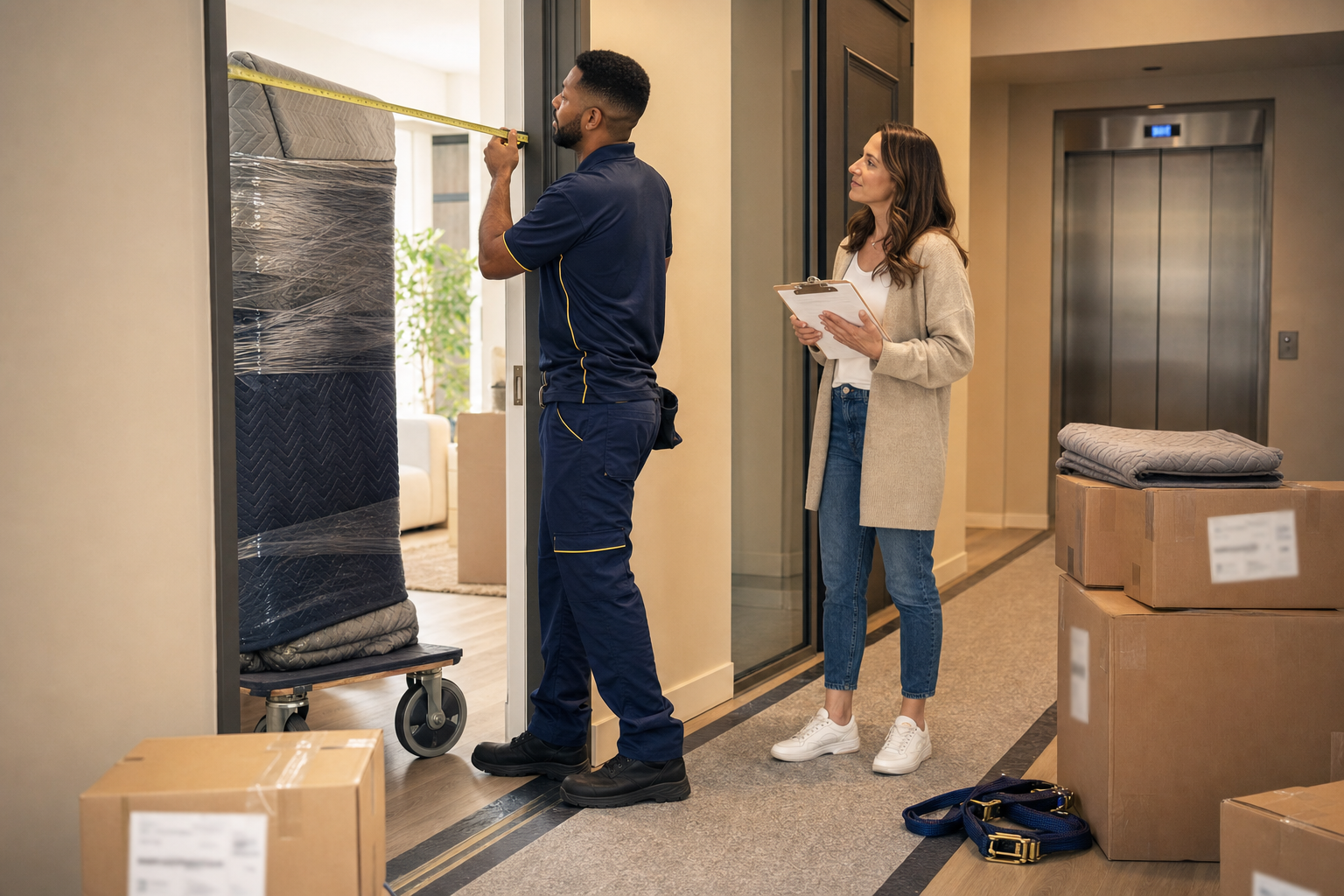
Inventory scope answers what is moving. Access scope answers how those items move from the home to the truck, then from the truck into the destination. Stairs, elevators, long carries, parking limits, narrow hallways, gated entries, and building rules can all affect that plan. For apartment moves, a separate apartment move checklist can also help keep building logistics and timing details visible.
For an interstate move, verification also belongs in the planning record. Federal Motor Carrier Safety Administration information may be relevant when a mover transports goods across state lines. This does not replace reading the mover’s own documents, but it gives more context for checking identity, authority, and move type.
A clean handoff connects the inventory, access notes, and delivery contacts. Helpful details often include:
- origin and destination addresses, without assumptions about entrance points;
- elevator, stair, gate, parking, or building access notes;
- contact names for pickup and delivery;
- room labels or box numbers that match the inventory;
- notes for wrapped furniture, fragile items, or pieces needing assembly context;
- destination instructions for where items belong on arrival.
Packing readiness supports the same goal. Closed, labeled, room-grouped boxes are easier to compare against an inventory than loose items or unclear stacks. It does not guarantee a perfect delivery, but it gives both sides a shared reference when items are loaded, transferred, and placed at the new address.
A stronger checklist gives movers facts they can actually use: what is moving, how it is packed, and what access looks like at both ends. Inventory, condition notes, access details, and verification records all reduce guesswork. For interstate moves, it can also be useful to review official mover information before booking.
Smart People Moving supports long-distance, California and out-of-state moves with planning around inventory, pickup access, delivery access and timelines. If you are preparing a long-distance moving quote, gather your inventory, access notes and timing details before you request a quote, so the conversation can start with a clearer moving plan.