
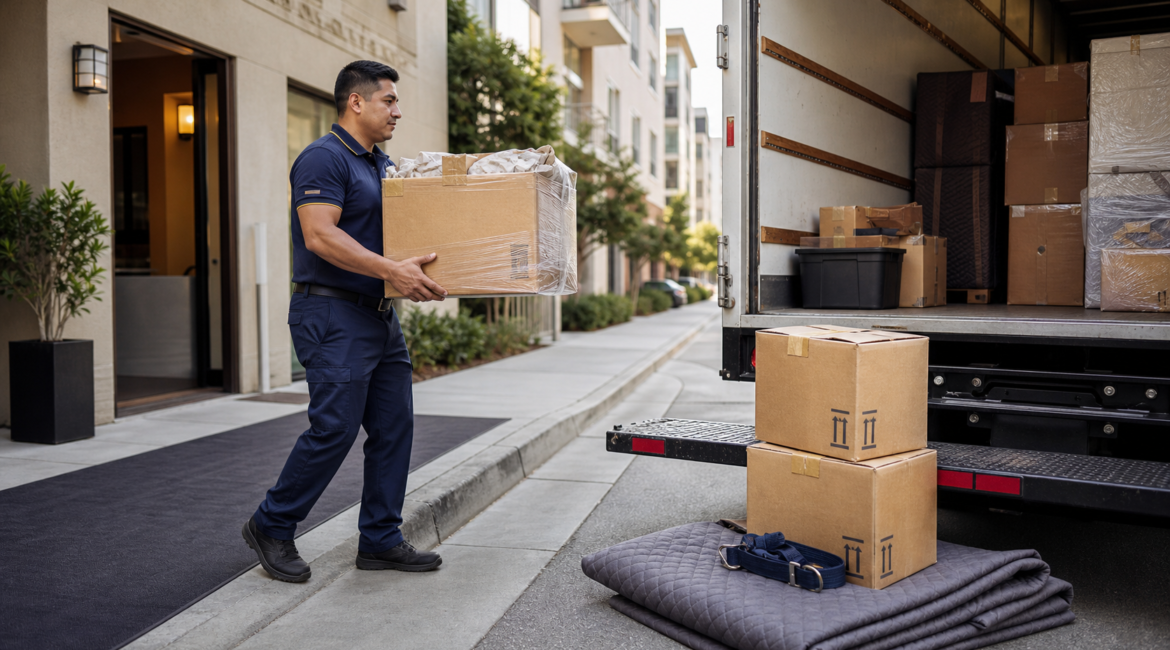
Fragile boxes can be packed carefully and still get damaged at the busiest point of a city move: the path into the truck. Tight elevators, stairs, curb pressure, and short loading windows all add handling risk.
The most useful protection is often simple. A steady handoff, clear route, and thoughtful truck placement help the packing do its job once the box starts moving. If building access is part of the plan, a broader apartment move checklist can also help keep logistics from crowding the loading stage.
Set a Stable Handoff Before the Truck
A fragile box is most exposed when it changes hands, direction, or surface. In a city move, that may happen at an apartment door, elevator lobby, curb edge, or narrow hallway. A stable handoff creates a short pause, so the box is not passed while someone is turning or stepping down.

The purpose is control. The box stays upright, the path stays clear, and the next person can see how it is supported. This matters because even a short local trip can involve repeated handling. Breakage risk comes from sudden pressure, tilted boxes, and rushed transfers, not only travel distance.
A useful handoff area usually has:
- a flat place where fragile boxes can stand without leaning;
- soft barriers near contact points, such as pads or floor runners;
- enough space for one person to release and another to receive;
- separation from heavier cartons waiting for the truck.
This does not require complicated gear. It simply gives the route a point where motion slows. For example, a cushioned dish box can pause near the elevator lobby before moving to the truck, instead of being carried straight through a crowded doorway. That pause helps keep its orientation consistent.
Labels help only when placement backs them up. If a fragile box sits under heavier cargo or moves through a cramped handoff, the label cannot prevent pressure. Pair clear marking with steady support, visible handling, and a clean route into the truck.
Keep Fragile Boxes Upright and Out of Crush Zones
Fragile protection does not end when the carton is sealed. The truck may travel only a short distance, but boxes still react to curbside loading, tight turns, braking, and repeated handling. For moves where the carrying path and truck access need extra care, experienced local movers can help keep these handling points more controlled.
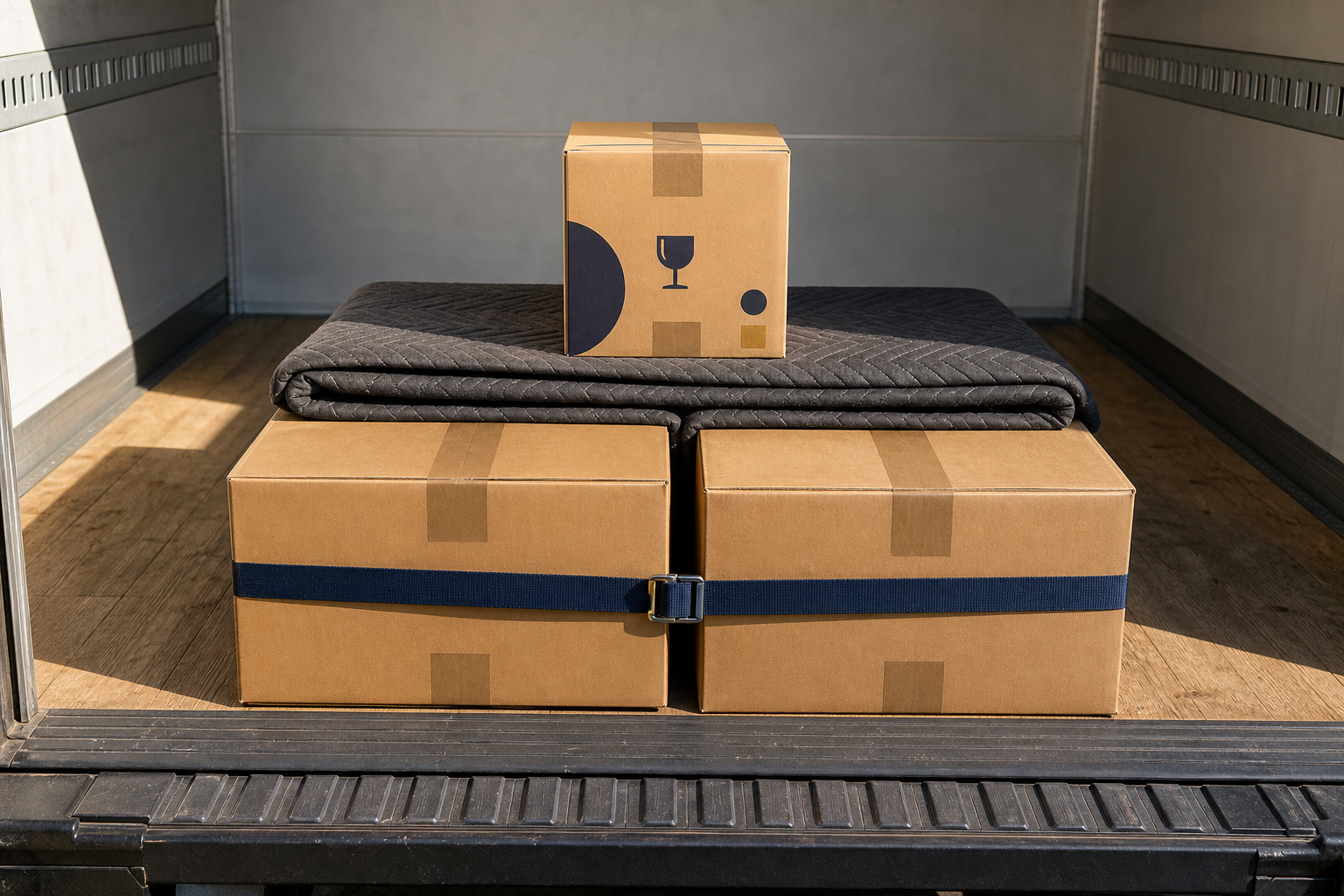
The main loading idea is simple: fragile boxes need a stable position, upright orientation, and distance from pressure points. Crush zones are areas where weight or movement can concentrate. They often form below heavy boxes, beside hard furniture edges, or in gaps where loose items can slide.
Upright placement matters most when contents were packed with a clear top and bottom. Dishes, glassware, decor, and electronics may rely on cushioning that assumes a certain orientation. If the box turns sideways, padding can compress differently, and items may settle against weaker points.
Separation adds another layer of control. Moving blankets, padded gaps, and stable neighboring boxes can buffer fragile cartons from heavier cargo. The goal is not to isolate every box, but to keep delicate cartons out of direct compression paths.
A quick visual check can help before the truck leaves. The fragile box should remain upright, carry no weight from above, and avoid any spot where a heavier item could shift into it. Packing protects the inside; placement controls the pressure around it.
Loading is part of fragile-item protection, not a separate final step. A strong box still needs a steady handoff, clear placement, and space away from crushing weight.
The safest-looking load is easy to read: boxes stand upright, padded contact points are visible, and heavier items cannot shift into delicate cartons.
Smart People Moving supports local city moves with packing, carrying, loading, and careful item placement during relocation. If you are planning a city move with fragile boxes, you can use this checklist as a reference and, when helpful, get a quote to discuss careful local moving support.