

Once the movers leave, the first challenge is not unpacking everything. It is making the new home work without creating more clutter.
A clear first-week order helps busy households focus on essentials first: sleep, hygiene, simple meals, charging devices, and basic routines. That keeps the move manageable while less urgent boxes stay closed until the core spaces are usable. For the planning side of the move, a practical apartment move checklist can also help keep address changes, utilities, and building details from competing with unpacking.
Start with the essentials box and first-night rooms
The first thing to unpack after moving is usually not a full room. It is the essentials box: the small set of items that carries the household through the first evening and next morning. Its job is simple. It reduces searching before the home is fully set up.
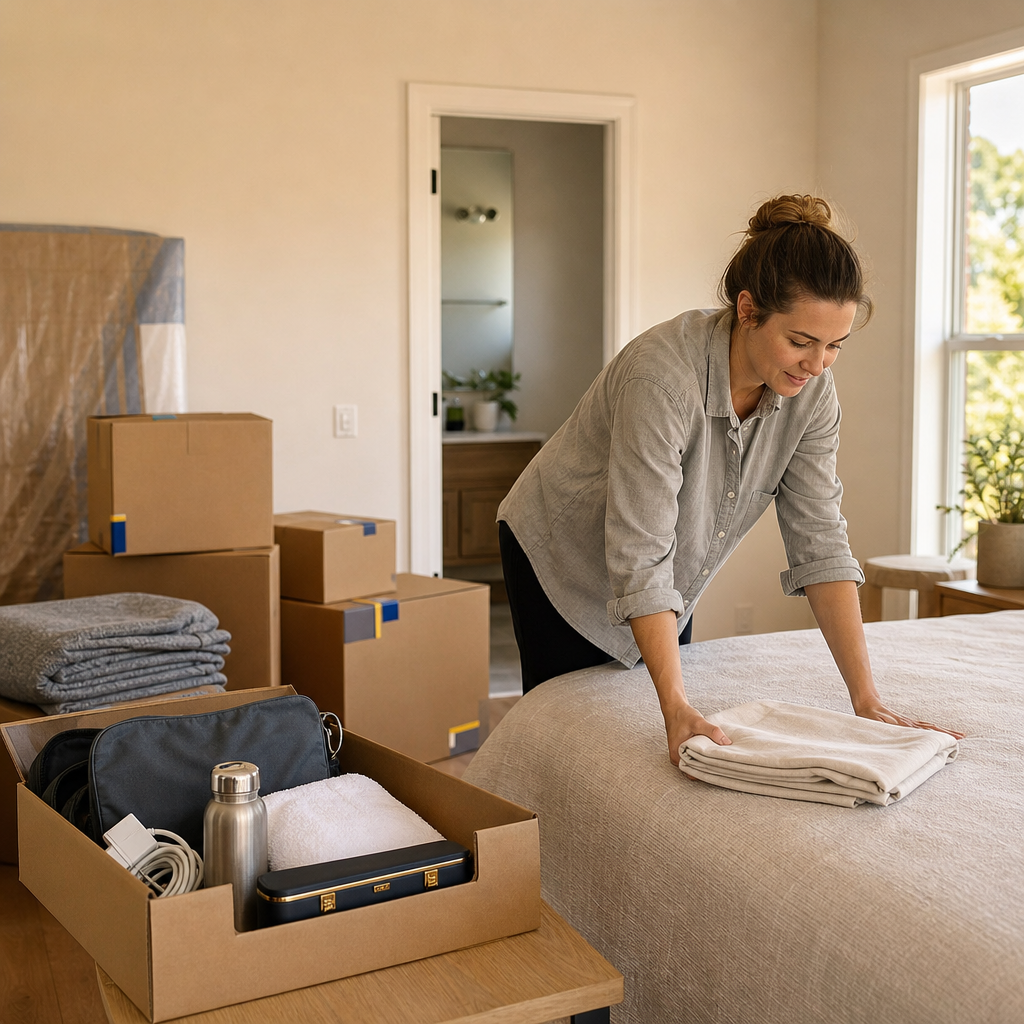
A practical essentials box often includes bedding, a clean towel, toiletries, phone chargers, basic clothing, water, simple kitchen items, and a small tool kit. Important documents, keys, and valuables are often kept separate from regular moving boxes so they do not disappear into the wider pile. The exact contents can vary, but the purpose stays the same: make the first hours livable without opening ten cartons.
After that, room priority should follow basic function. The bedroom or main sleeping area often comes first because rest affects the next day. If children are part of the move, their sleeping space may take priority instead.
The bathroom usually follows because a few items make it usable quickly: towels, toiletries, toilet paper, hand soap, and shower basics. The kitchen can stay simple at first. Water, coffee, a few dishes, and easy meal items are enough to create basic access.
This is the useful limit: unpack what supports sleeping, washing, charging devices, and eating. Decorative items, storage boxes, and extra drawers can wait.
Use room priority and labels to keep the first week narrow
A move feels bigger when every box looks equally urgent. Room priority changes that. It separates the first setup phase from the boxes that can wait, so the question becomes: which rooms make the home usable first?
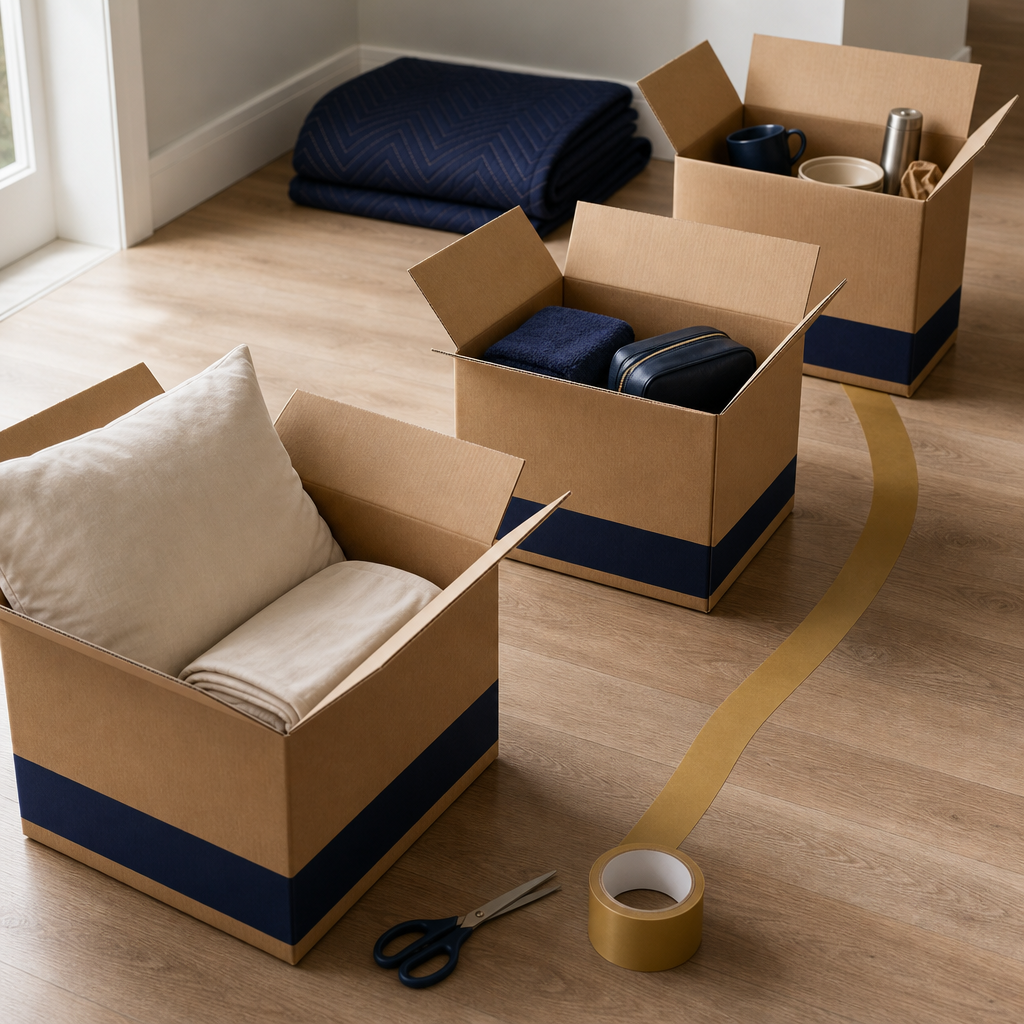
For most households, the early focus is sleep, basic hygiene, and simple food access. That usually points to the bedroom, bathroom, and kitchen. The order can shift. A family may put a child’s room near the top, while someone living alone may focus on the bedroom and bathroom first.
Labels make this system easier to follow. A helpful label names the room and gives a short contents note. “Bedroom — sheets and pillows” has a different role from “Bedroom — décor.” In the kitchen, mugs and basic dishes matter sooner than specialty cookware.
Color bands, room names, or short notes can all work if they are easy to recognize. The goal is to land boxes near the right room and keep the first unpacking pass narrow. That helps avoid opening five boxes to find one towel, charger, or sheet set. If professional help is part of the plan, it can also be useful to confirm whether packing and labeling support is included in the moving services you choose.
The essentials box sits outside this room-by-room system. It covers the items that need to be reachable immediately. Then room priority carries the setup forward without turning the first week into a full-home reset.
The best unpacking order is not about finishing every box quickly. It is about making the home usable first. Essentials, sleep, bathroom access, kitchen basics, and workday needs usually come before décor or storage.
For a future move, it can help to decide what must be reachable on night one and label boxes by both room and priority.
Smart People Moving provides moving services and can discuss packing, labeling, and unpacking support to make the new home easier to set up after arrival. If you are planning a move where the first week needs to run smoothly, you can ask Smart People Moving about support before move day.