
City moves don’t usually break fragile items in one dramatic drop. It’s the small hits—elevator gaps, tight corners, curb cuts—and the steady vibration on short drives.
A simple goal helps: stop things from shifting inside the box, then reduce bumps during the “last 50 feet” to the truck. With a consistent setup, glassware, frames, and small electronics tend to arrive in much better shape—especially on busy local moves in the city.
How to build a “no-shift” box (wrapping, separation, and fill)
City moves add constant micro-impacts: elevator thresholds, narrow turns, quick set-downs, and stop-and-go driving. For breakables, the most common problem is not one big fall—it’s repeated movement inside the carton.
A “no-shift” box treats the carton like a cushioned shell with a stabilized interior. The aim is simple: no hard contact points, and no empty pockets that let items gain momentum.
Most setups come down to three layers:
- Bottom cushion: a compressible base that absorbs set-down shocks and vibration.
- Protected interior: each item wrapped, with padding between items so surfaces never touch.
- Top cushion: a cap layer that reduces impact from above and stacking pressure.
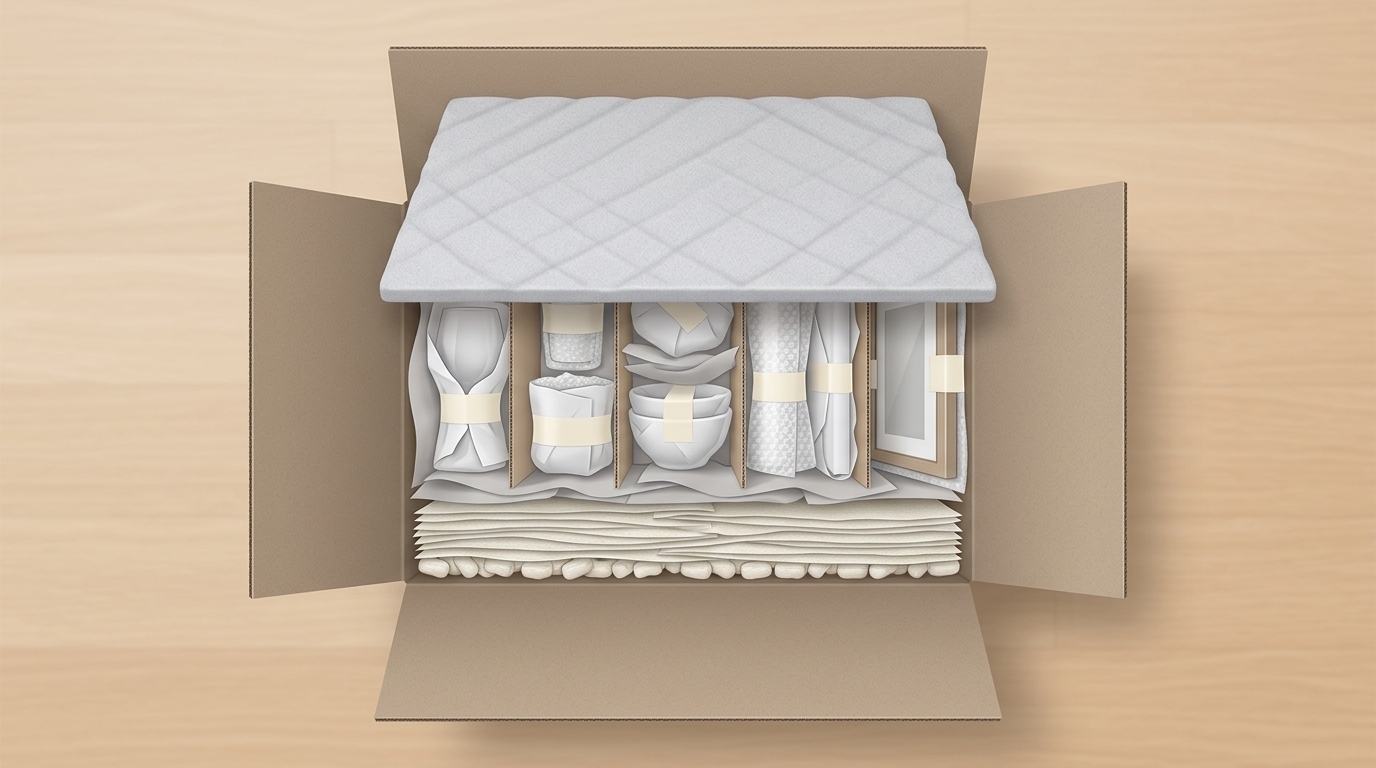
Supplies usually play three clear roles:
- Wrapping (first barrier): packing paper, foam sheets, bubble wrap, stretch wrap.
- Separation (prevents contact): crumpled paper, foam, air pillows, cardboard dividers, frame corner protectors.
- Reinforcement (stabilizes the box): sturdy cartons and strong tape along seams and edges.
Void fill is where many “good” boxes fail. Soft goods like towels can work, but they compress and shift more than structured padding. That difference matters on a short, rough truck ride.
If you want a general reference point for how carriers think about fragile packing, FedEx shares basic guidelines here: https://www.fedex.com/en-us/shipping/packing/how-to-pack.html.
If you’re comparing approaches, this apartment-friendly method to wrap, box, label, and carry breakables expands on the same “no-shift” idea with a repeatable routine.
Apartment-to-truck handling (labels, elevators, hallways, and loading)
In many city moves, damage happens after the box is sealed—during the “last 50 feet” from apartment to truck. That path combines door thresholds, tight turns, elevator gaps, and quick handoffs.
Labeling that actually changes handling
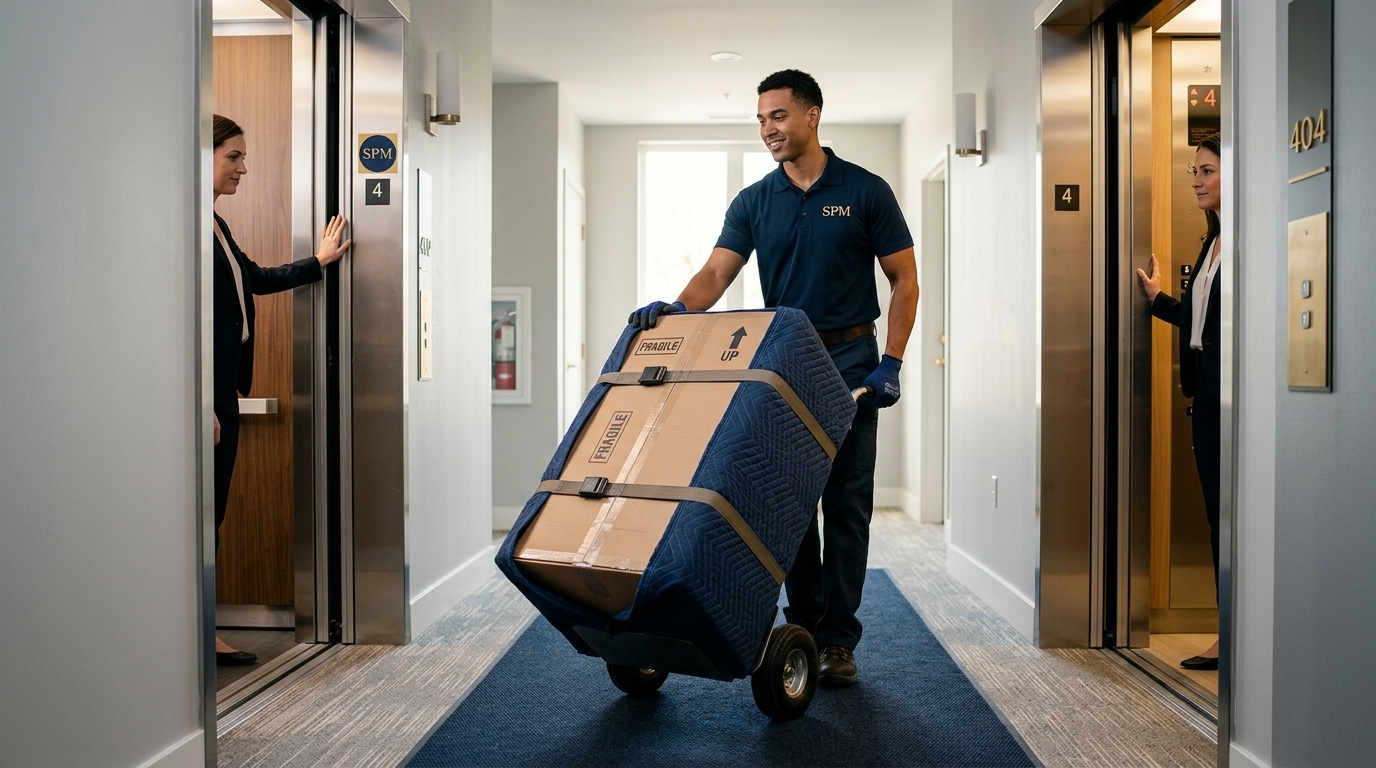
Labels work best as a shared signal. Clear “Fragile” and “This side up” markings reduce guesswork when boxes get staged in a hallway or stacked near an elevator. Vague labels tend to lead to inconsistent grips and uneven stacking.
Elevators and hallways: where boxes take the hits
Apartment buildings have predictable friction points: narrow corridors, sharp corners, and elevator doors on a timer. The riskiest moments are transitions—rolling over a threshold, pivoting through a doorway, or setting a load down to wait.
That’s where protection around the box matters. Moving blankets, corner guards, and straps help keep the carton from taking direct contact with railings, walls, and floor edges.
Truck loading: vibration plus shifting
Urban routes can be short but rough. Inside the truck, vibration gets worse when cartons have room to slide or when heavy items transfer force into lighter boxes. A common example is a fragile carton rubbing against a hard-edged object during turns until the cardboard wears down.
In practice, fragile-item protection is shaped by handoffs, tight spaces, and vibration—not only by what’s inside the box.
Fragile items tend to survive city moves when the trip is treated as many small impacts, not one long drive. A “no-shift” box reduces internal movement, and careful apartment-to-truck handling reduces the bumps that add up over time.
It can help to think in two checks: no empty space inside the carton, and no rough transitions on the carry path. In the end, less shifting means fewer surprises when you unpack. If you want to talk through timing, access details, or building logistics, you can reach the team here.
Smart People Moving supports local city moves with careful handling, plus optional packing support for fragile household items. If you’d like a hand packing or moving breakables in an apartment building, call Smart People Moving to talk through options for your city move.