Most moving damage begins before anyone lifts a box. A narrow hallway, loose drawer, wet entry, or unprotected screen can turn a nearby move into repairs and delays.
This practical how-to plan helps homeowners and office teams reduce moving-day damage during a local move with clearer routes, better packing, surface protection, safer handling, and simple checks after unloading.
What should be planned before moving day?

A damage-safe move starts with the path, not the truck. The biggest risks often come from unclear routes, oversized furniture, weak boxes, or unprotected surfaces in busy areas. For homes and offices, planning should cover inventory, fit, access, surface protection, and responsibility for high-value items.
An inventory gives the move order. It separates fragile items, bulky furniture, electronics, files, and daily-use goods. At home, that may mean dishes, mirrors, lamps, and wardrobes. In an office, it may mean monitors, printers, server equipment, desk parts, file boxes, and chairs with wheels or glass.
Fit and route checks show where contact damage is more likely. Furniture, doorways, hallways, stair turns, elevators, and loading areas should be compared before moving day. A sofa that barely clears a hallway creates a different risk than a stack of boxes. Office desks, conference tables, and cabinets can add metal edges, glass tops, or modular parts.
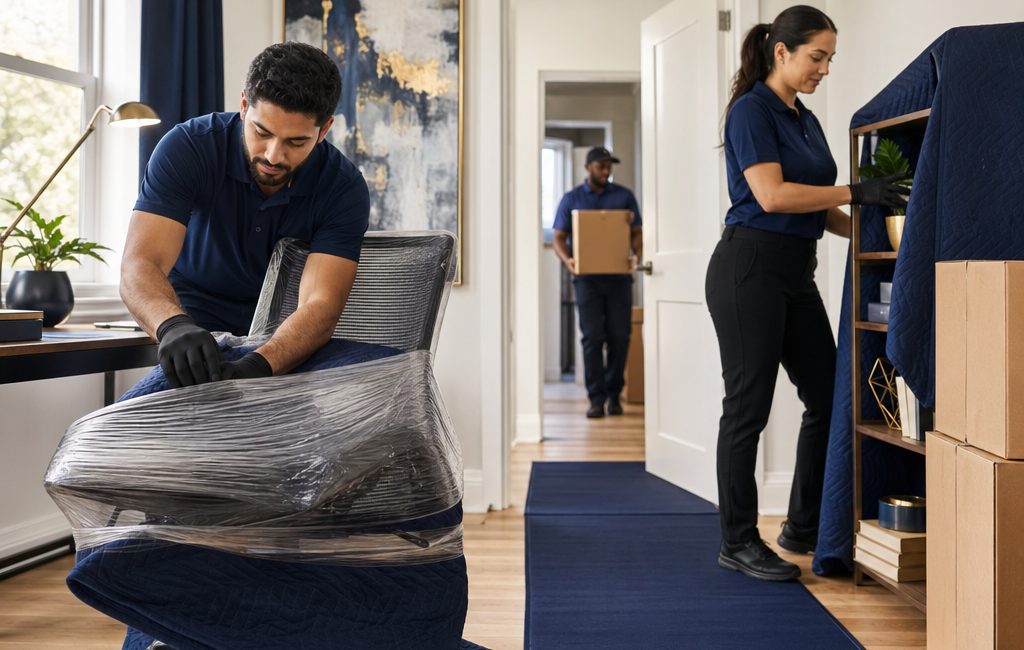
Surface protection matters just as much as item protection. Floors, stairs, corners, railings, walls, and door frames are common impact points. Moving blankets, pads, sliders, cardboard padding, runners, and corner guards create a buffer, especially near hardwood floors, narrow entries, and shared corridors.
Packing supplies complete the plan. Sturdy boxes, tape, bubble wrap, dish packs, mirror boxes, stretch wrap, and anti-static bags each protect different contents. The goal is simple: know what is moving, where it will pass, and which items need extra care.
How should items be packed, carried, loaded, and reset safely?
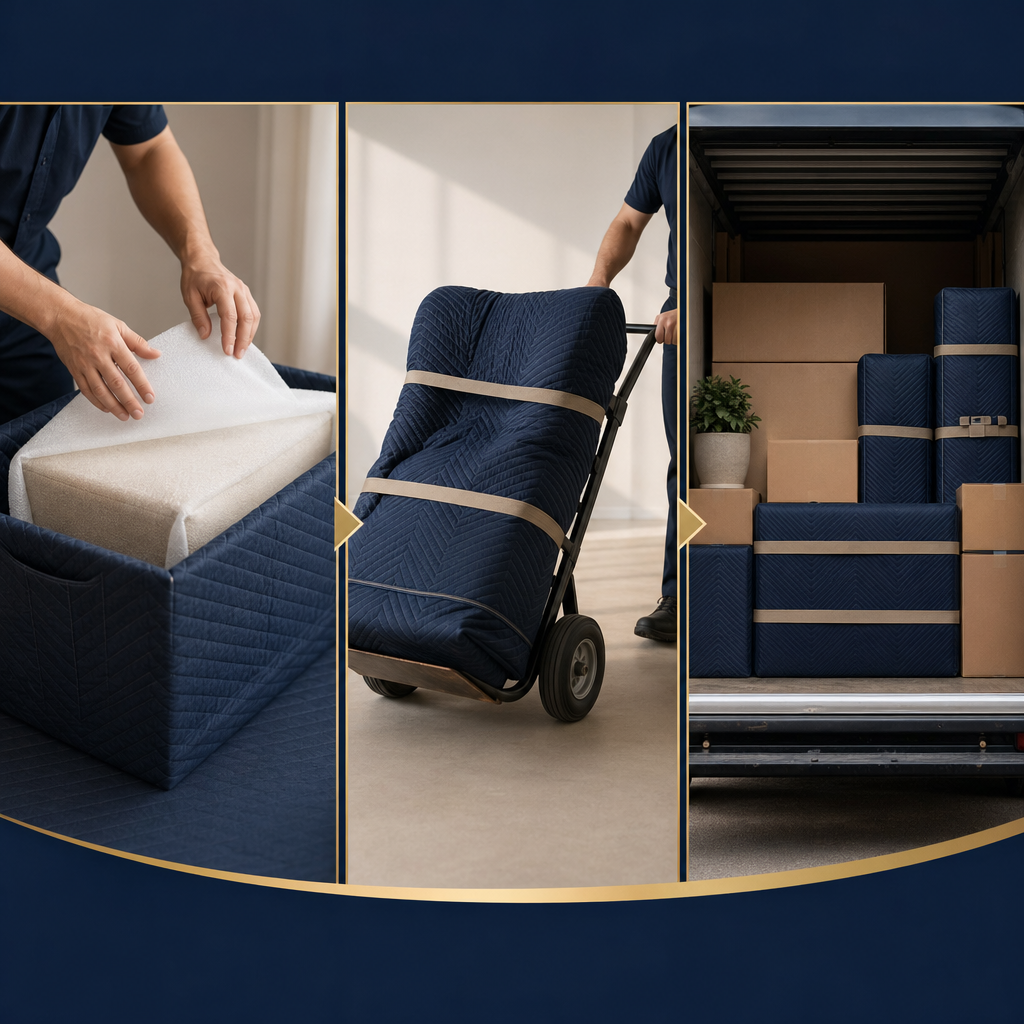
Packing, carrying, loading, and resetting work as one chain. When one part is weak, damage can show up later. In risk and damage prevention guides for household and office moves, this link matters because trouble often starts before an item reaches the truck.
Packing controls pressure, vibration, and contact. Dishes, mirrors, and lamps need cushioning and stable boxes, not empty space. For a closer look at this part of the move, the same packing logic applies when you protect fragile items during a city move. Office monitors, desktop computers, files, and small equipment need the same care, plus clear labels so related parts stay together.
Carrying shifts the risk from the box to the building. Large furniture, filing cabinets, wrapped chairs, and electronics can mark floors, walls, door frames, and stair edges. Dollies, sliders, padding, and straps help spread weight and reduce scraping. Clear walkways also matter. Narrow halls, loose rugs, wet entrances, and crowded rooms create more chances for contact.
Loading adds weight, balance, and restraint. Heavy furniture and dense boxes can crush lighter items if the load shifts. Open space inside the truck allows movement during turns or stops. Soft materials, tiedowns, and close stacking help limit that movement, especially when home belongings and office equipment ride together.
After unloading, the space still needs attention. Boxes, wrapping, cords, tools, and furniture parts can block kitchens, bedrooms, entryways, desks, file areas, meeting rooms, and cable routes. A cleaner reset keeps the move safer and helps the new space function sooner.
A safer local move usually comes from a few steady choices: measuring routes, protecting surfaces, packing with real cushioning, and keeping walkways clear. The same ideas apply to homes and offices, though electronics, files, and workstations need closer attention.
Before booking or starting a do-it-yourself move, it can help to compare available equipment, heavy-item support, access needs, parking, and damage coverage.
If you are planning a nearby home or office move, Smart People Moving helps local residents and businesses with household and office moves, including planning support, careful handling, and property protection. You can call or contact the team to discuss timing, access, parking, and practical support for your space.