

In a city move, fragile items usually break for predictable reasons: the wrong box, not enough cushioning, or too much space to shift.
Short carries, tight hallways, quick set-downs, and elevator stop-and-go can turn small gaps into cracked glass. If you’re preparing for a short-distance move, it helps to review what local movers typically recommend for tighter buildings and quick loading zones.
Inside-the-box mistakes: weak cushioning, empty gaps, and boxes that are too big
A lot of city-move breakage starts inside the box. The usual culprits are thin “layers” of protection, open space that lets items move, and cartons that are bigger than the contents.
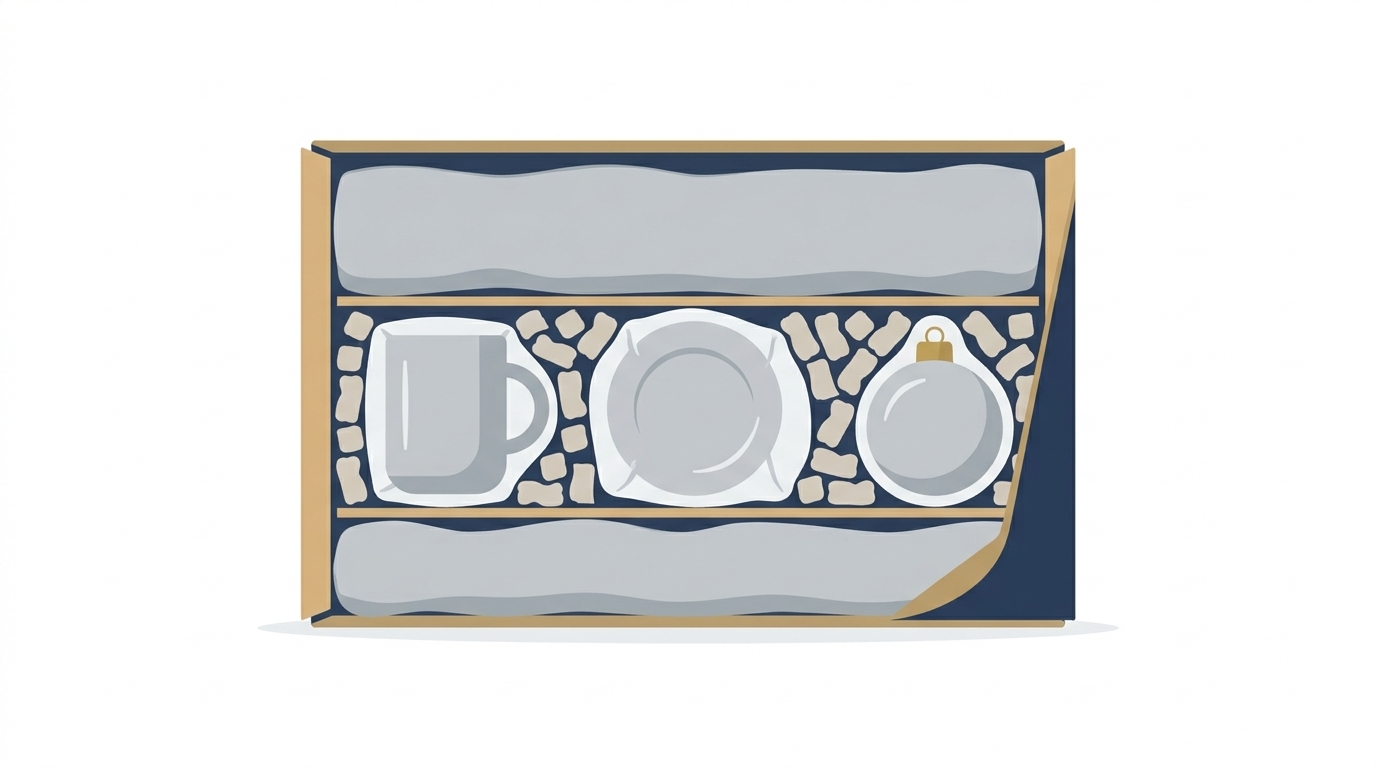
Weak layering means the protection is uneven. For example, the glassware is wrapped, but the bottom of the box is bare. When the box is set down in a hallway, elevator, or at the curb, impact travels straight through. The reverse happens too: a soft bottom, but little separation in the middle. When fragile surfaces touch, small vibrations can become chips.
Empty space is a quiet problem. Movers often call the soft material that fills gaps “void fill.” Without it, wrapped items can slide, rotate, and settle. Even a fully taped box can act like a container with loose parts. City moves make this worse with quick turns, short carries over thresholds, and frequent stops.
Oversized boxes create two risks at once:
- More empty volume, so items have room to shift.
- More weight and stacking pressure, which can bow the walls and compress what’s inside.
A simple example: glasses that feel secure at home can crack after a few blocks once shifting and stacking forces add up. If you want a more structured approach, this repeatable method to wrap, box, label, and carry breakables is designed for elevators, tight hallways, and short truck rides.
Key takeaway: breakage often traces back to uneven cushioning, unfilled gaps, and too much box volume for the items inside.
Move-day mistakes: labeling, stacking, and city handling (elevators and tight streets)
On move day, fragile items often get damaged even when they were wrapped well. The most common issues are unclear labeling, unstable stacks, and extra handling in tight city spaces.

Labeling problems usually come from giving only one signal: “fragile.” When boxes look the same, glassware can get grouped with heavy items like books. That confusion leads to extra re-handling—boxes get shifted, moved aside, or rotated multiple times while someone sorts rooms or priorities. Mixed shorthand can also backfire if different people interpret markings differently.
Stacking mistakes tend to start with weight and balance. A larger box of breakables can look neat, but it behaves differently when carried through doorways or turned on landings. Tall, narrow stacks tip more easily on uneven lobby floors. And pressure matters: a small slide inside the box plus a heavy box placed on top can turn a minor jolt into a cracked edge.
City handling adds its own stress. Elevators create start-stop motion, crowded lobbies force tight turns, and curb heights can mean short carries over rough pavement. A box that feels stable in a hallway may shift during a quick sidewalk carry from the entrance to the truck.
Overall, move-day breakage is often a systems problem: unclear signals, unstable stacks, and repeated micro-impacts that add up.
Most fragile-item damage in a city move comes down to three things: movement inside the box, weight and pressure from stacking, and rushed handling in tight spaces. Snug, sturdy boxes with even cushioning and no empty gaps solve a big part of it.
Clear labels and stable stacks help just as much once you’re in elevators, hallways, and loading zones. For extra peace of mind, it can help to ask your mover what packing or handling options they offer for breakables.
Smart People Moving supports local city moves and can help plan safer packing and handling for fragile household items.
If you’re planning a careful city move and worried about breakables, you can request a quote online and ask about options for packing and move-day handling.