

Kitchen packing gets complicated because one room holds fragile dishes, sharp tools, heavy cookware, liquids, food, and everyday basics. Treating everything the same can lead to heavy boxes, rushed decisions, and confusing unpacking.
A clear kitchen packing checklist helps separate simple items from the pieces that need more care. It also makes it easier to decide when partial packing support is useful, especially before a local move with limited time.
Pack the kitchen by risk, not by cabinet
A useful kitchen packing checklist does not simply move from cabinet to cabinet. The kitchen mixes breakable dishes, heavy appliances, sharp tools, liquids, food, and daily-use items in one space. Packing by cabinet can hide those differences and create boxes that are too heavy, poorly cushioned, or hard to unpack.
Start with risk groups:
- Fragile items: plates, bowls, glasses, mugs, serving dishes, and thin glassware.
- Heavy items: cookware, cast iron, small appliances, and dense pantry goods.
- Sharp items: knives, skewers, peelers, and tools with exposed edges.
- Leak or spoilage items: open food, oils, sauces, and cleaning products.
- Daily-use items: pieces still needed close to moving day.
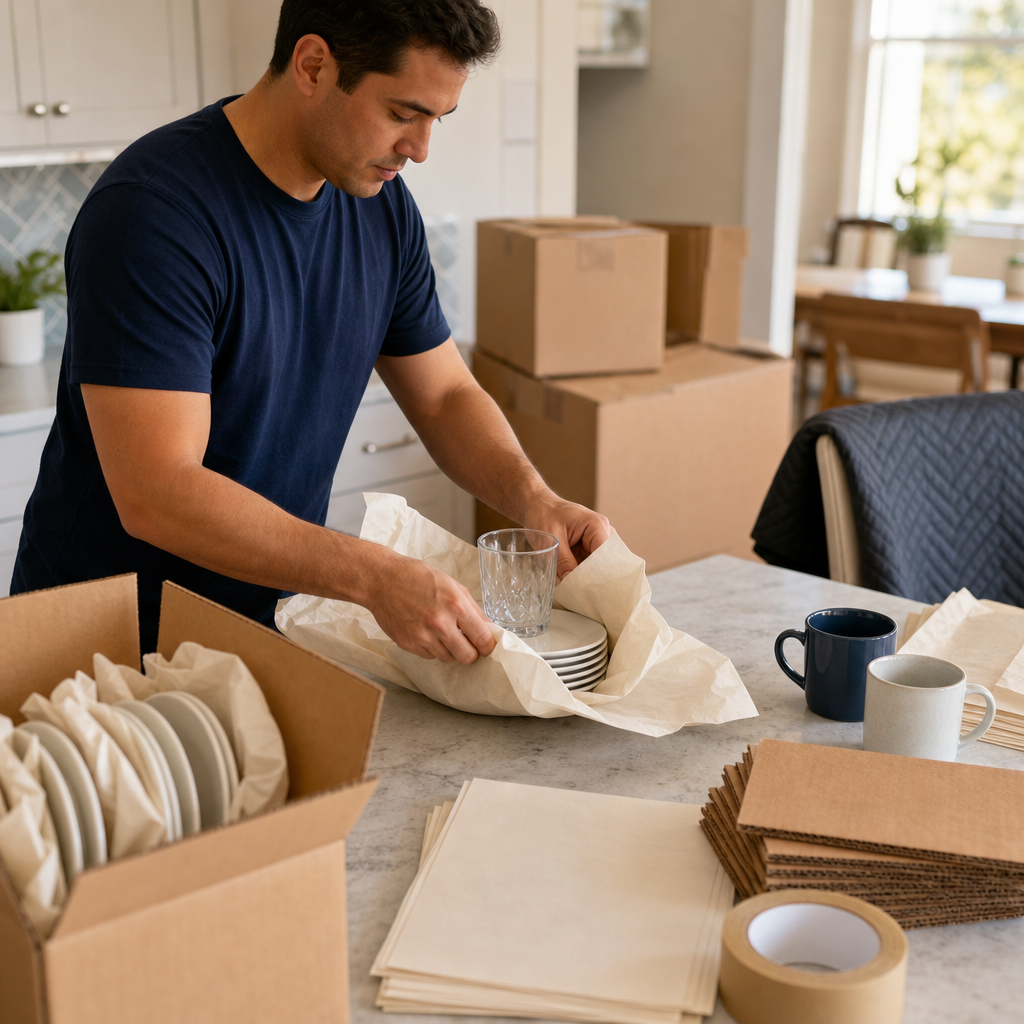
Fragile kitchen items usually need the most structure. Dish boxes, small sturdy boxes, packing paper, and dividers give more control than a loose mix of dishes and mugs. Plates and glassware also react differently under pressure, so they work better as a breakage category than as “things from the same shelf.”
Heavy items create a separate problem. Protection matters, but the box also has to stay manageable. A large carton filled with cookware or appliances can become hard to lift and more likely to shift. Smaller boxes usually fit this category better because they contain weight and reduce movement.
Labels should show risk as well as room. “Kitchen — fragile glasses” or “Kitchen — heavy cookware” gives clearer handling and unpacking context than “Kitchen” alone. A do-not-pack category also helps. Movers may limit or exclude perishable food, open containers, leaking liquids, and some cleaning products, depending on policy.
Sorting by risk makes the kitchen easier to divide. Low-risk items can be packed first, while fragile, heavy, or uncertain items become natural candidates for partial packing support.
Use partial packing where the kitchen slows down
The best candidates for partial packing are often the items that delay everything else. Simple mugs, everyday utensils, plastic containers, and dry pantry goods can usually be sorted with ordinary care. The slower work begins with fragile, heavy, awkward, or unclear items.
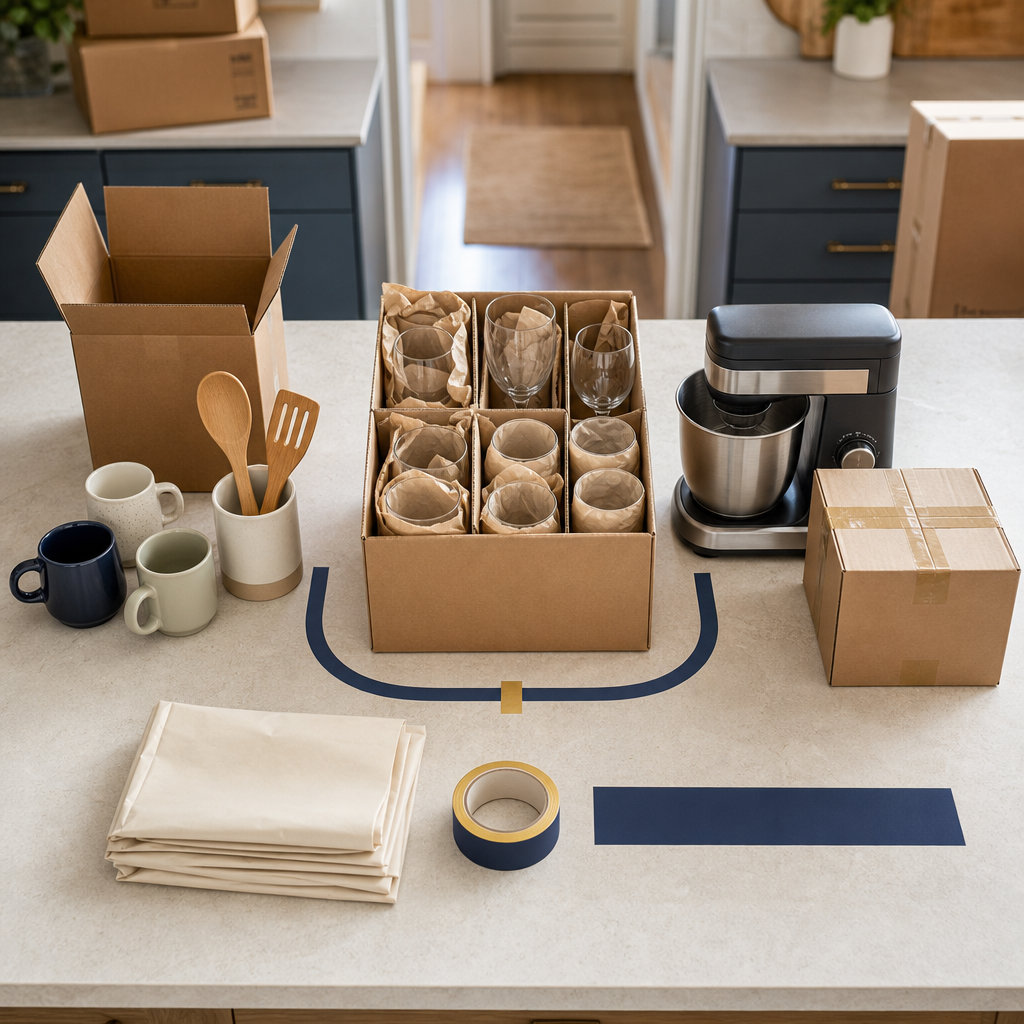
Glassware is a common bottleneck because each piece needs space, cushioning, and separation. Stemware, thin glasses, serving bowls, and delicate dishes may need dividers or sturdier dish boxes instead of loose placement in a large carton. The point is not only breakage risk. A stable, readable box takes time to build well.
Heavy kitchen items slow packing in a different way. A compact appliance, cast-iron pan, or dense stack of cookware can make a large box difficult to lift if grouped casually. Smaller, stronger boxes often make better sense for weight control, and clear labels help anyone handling the box understand what is inside.
Some items also create uncertainty. Open food, perishable goods, cleaning products, and anything with spill or safety concerns do not fit neatly into a standard packing plan. Treating every kitchen object as “just another box” can leave too much sorting for the final hours, especially when move-day logistics are already competing for attention.
A practical split is to pack predictable items yourself and reserve partial packing for fragile glassware, specialty dishes, knives, small appliances, and heavy cookware. This keeps the kitchen moving without turning the entire room into a full-service packing project. Partial packing has the most value when it protects time, reduces confusion, and gives the hardest boxes clearer handling from the start.
A safer kitchen plan starts with sorting, not rushing. Fragile pieces need structure, heavy items need smaller sturdy boxes, and labels work best when they show both room and contents.
If the kitchen becomes the slowest room, partial packing can focus help where it matters most: glassware, dishes, knives, heavy appliances, or items that feel harder to handle under time pressure.
Smart People Moving supports local moves with packing help, including partial packing for fragile, heavy, or time-sensitive rooms and items. If the kitchen is slowing down your move, you can ask about partial packing for the items that need extra time or care.