
Fragile packing can feel simple until an awkward lamp, mirror, or sentimental bowl has to fit inside a box. More bubble wrap is not always the answer. The safer question is whether the item has the right material, carton, label, and handling plan. For a local move or a longer relocation, that distinction can make packing choices clearer before move day.
Which fragile items can you reasonably pack yourself?
Small, replaceable items are often the most reasonable fragile pieces to pack at home. Everyday glasses, mugs, small bowls, basic plates, simple vases, and uncomplicated decor usually fit this group. They can be handled on a table, wrapped with control, and placed in sturdy boxes without special packing methods.
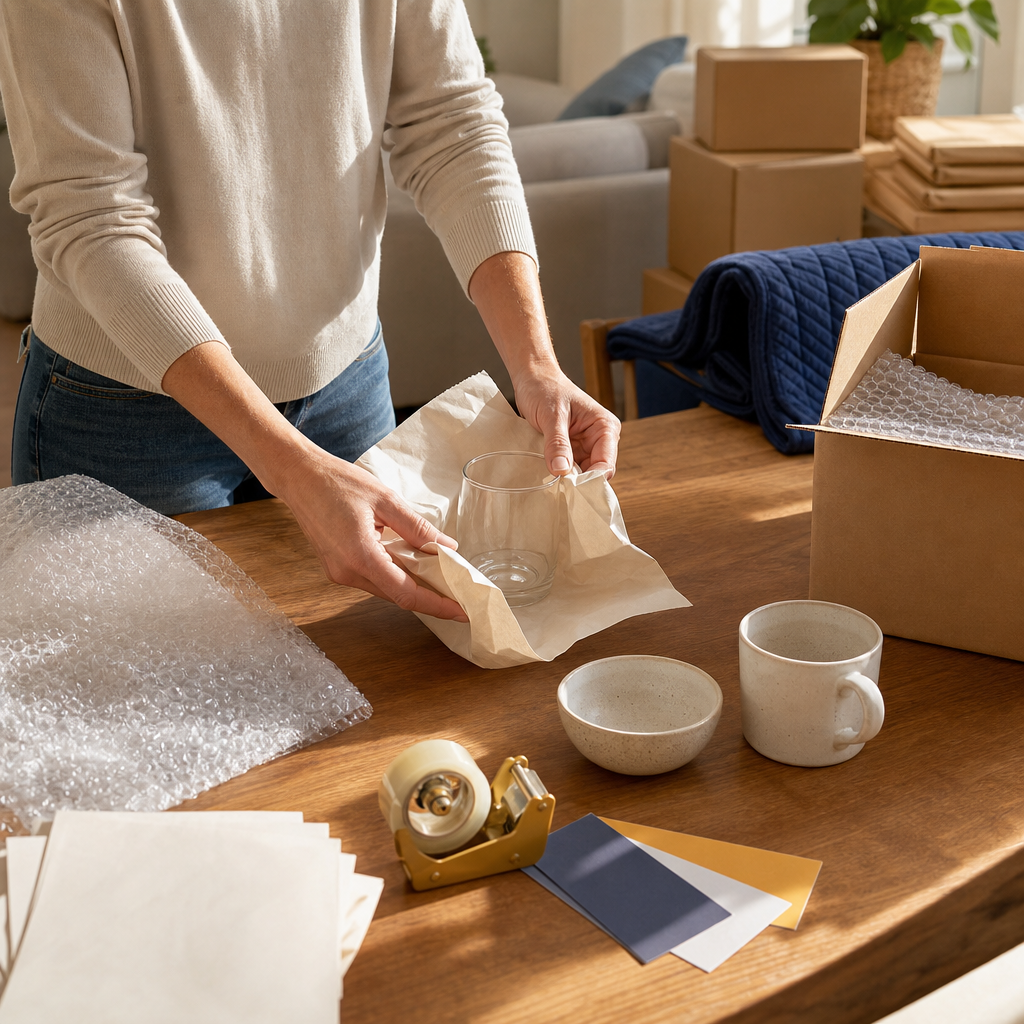
The useful test is predictability. A plain mug or bowl usually accepts packing paper, cushioning, and a snug box. A heavier, awkward, or very thin item creates a different problem. Extra material will not help much if the box fit still allows pressure or movement.
DIY packing also works better when the item has no complex parts. Simple kitchenware is different from lamps with shades, electronics with screens and cords, mirrors, framed art, antiques, or pieces with strong sentimental value. Those items may need different materials, closer handling, or a packing option discussed with the movers.
Photos and labels help even when you pack the box yourself. Photos show visible condition before packing. Labels identify the room, contents, and fragile status. Neither step guarantees a damage outcome or a valuation decision, but both make the box easier to understand during the move.
A sensible DIY category is ordinary fragile inventory: modest value, simple shape, and easy replacement. When an item is oversized, unusually delicate, valuable, or hard to document, the question changes from “can I wrap it?” to “should I pack this myself?”
When does partial professional packing make sense?
Partial professional packing sits between full DIY packing and full-service packing. It can be useful when only a few items create most of the concern. A shelf of ordinary glasses may be manageable with sturdy boxes, paper, cushioning, and labels. A large mirror, delicate lamp, framed artwork, or electronic item deserves a different conversation because shape, replacement difficulty, and materials matter too.
The best time to raise this is during the quote or scope discussion, not on move day. Movers can clarify whether they offer item-specific packing, room-level packing, or only full packing. Service boundaries vary, so the same phrase may mean different things from one company to another. For apartment planning beyond packing, an apartment move checklist can also help keep timing, building access, and other small details from getting lost.
The question becomes especially relevant when:
- the item is awkward, thin, tall, or hard to box;
- the right carton, padding, dividers, or corner protection is not available;
- the item is valuable to the household or difficult to replace;
- the room has many fragile pieces and limited packing time;
- valuation paperwork depends on who packed the item.
This does not mean every fragile item needs professional packing. It means fragile packing for movers is about fit, not just wrap. Box strength, cushioning, empty-space control, and clear labeling all matter. A fragile label helps communication, but it cannot replace suitable packing.
Condition photos can support the discussion. They do not promise reimbursement or replace valuation terms. They can create a clearer record of visible condition before packing and transport, especially when paired with labels and an agreed packing scope.
Fragile packing works best when the plan matches the item. Small, simple pieces may be manageable with sturdy boxes, cushioning, labels, and photos. Mirrors, lamps, electronics, or hard-to-replace items call for a clearer packing-scope conversation. It can also be useful to review valuation details before move day, so expectations stay realistic.
If you are unsure about a few fragile items, you can share the details with Smart People Moving and ask whether partial packing fits your move. Smart People Moving can discuss your moving scope and fragile-item needs, including whether selected packing support belongs in the plan.