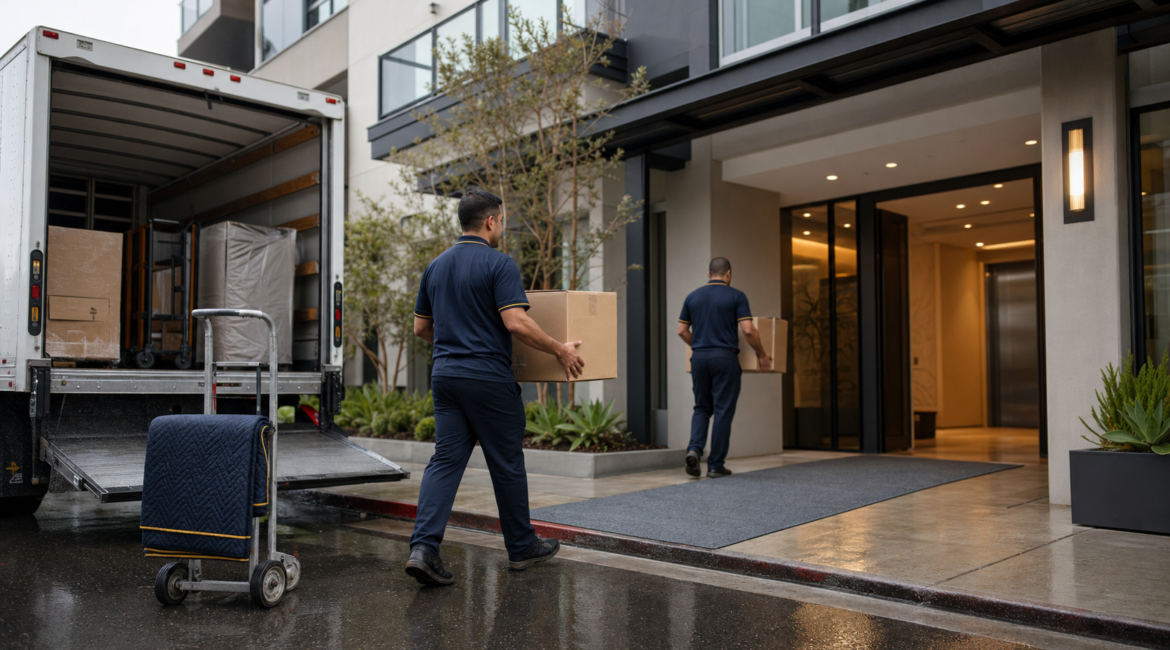
Rain does not make an apartment move impossible, but it changes what matters. The key detail is the path from the truck to the unit: curb, lobby, elevator, hallway, and front door.
For apartment and condo moves, a little planning can prevent soaked boxes, slippery floors, and building-access delays. A clear route, protected surfaces, and separate handling for sensitive items keep the day calmer and easier to manage.
Start with the curb-to-unit route
A rainy apartment move starts with one practical question: how long is each item exposed between the truck and the unit? Every extra stretch of uncovered sidewalk, curb edge, or hallway gives boxes, shoes, dollies, and furniture more chances to collect water.
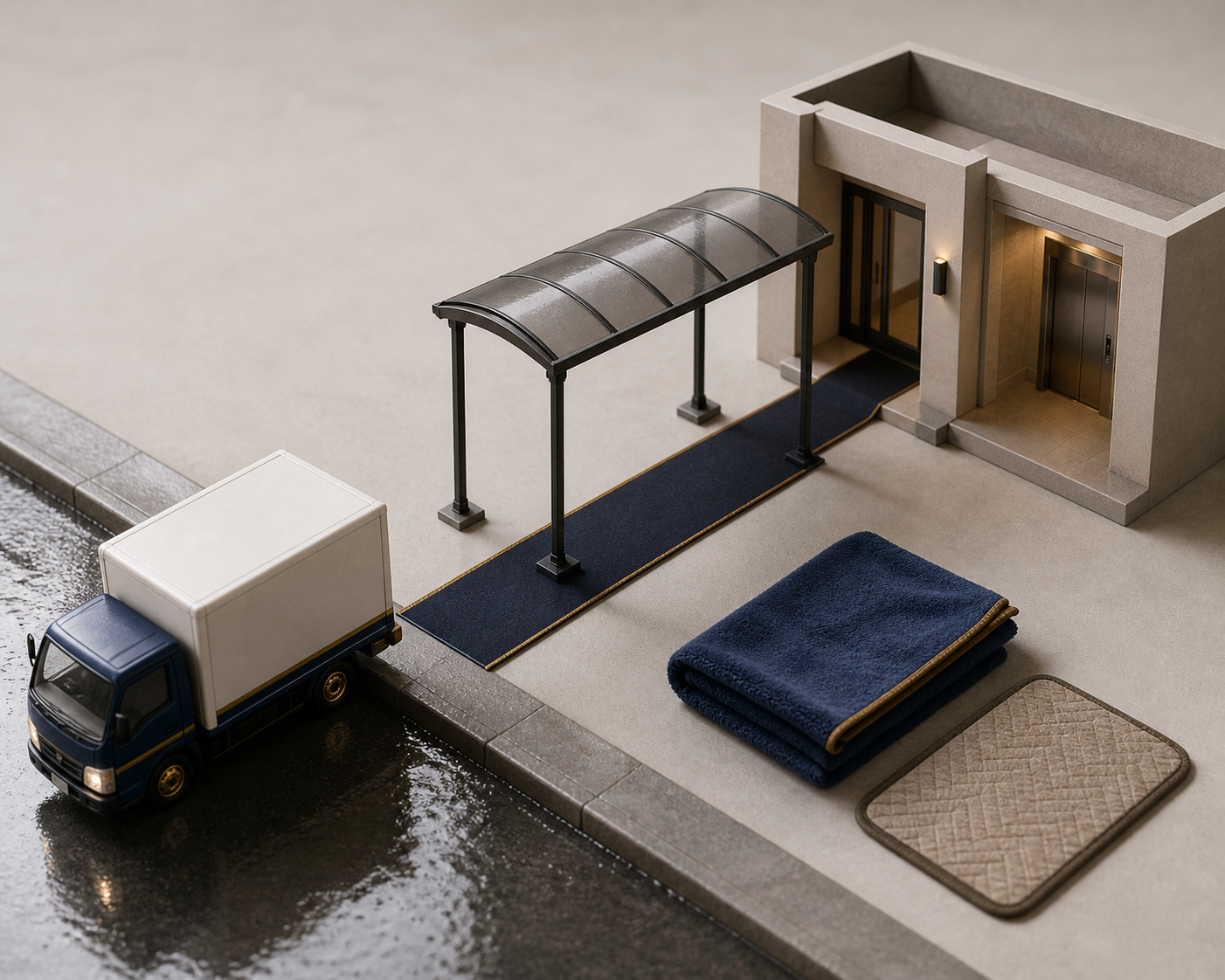
In a condo or high-rise, the route may include a loading zone, lobby threshold, elevator alcove, corridor, and unit entry. Parking close to the approved entrance usually matters more than moving fast. A covered walkway, loading dock, or canopy helps only when the truck position, elevator window, and building rules work together.
Those rules can be as important as the weather. A property manager or HOA may control loading areas, elevator reservations, certificates of insurance, and allowed move windows. When those details are unclear, the move can stall at the door. For related planning details beyond wet weather, this apartment move checklist for building logistics can help keep small tasks from stacking up.
The route also shapes floor protection. Smooth lobby floors, exterior stairs, and carpeted hallways each need a different level of care. Floor runners, mats, and absorbent cloths create transition points where water and debris are easier to contain.
Water-sensitive items should not be the ones waiting near a wet threshold. Electronics, documents, artwork, wood pieces, and soft textiles benefit from a dry staging plan and a predictable path inside.
Protect floors, boxes, and moisture-sensitive belongings
Once the route is set, the next concern is moisture control. Rain falls outside, but the bigger problem is often water tracked through the entry, elevator, hallway, and unit. A protected walkway separates the wet zone near the door from cleaner interior areas.
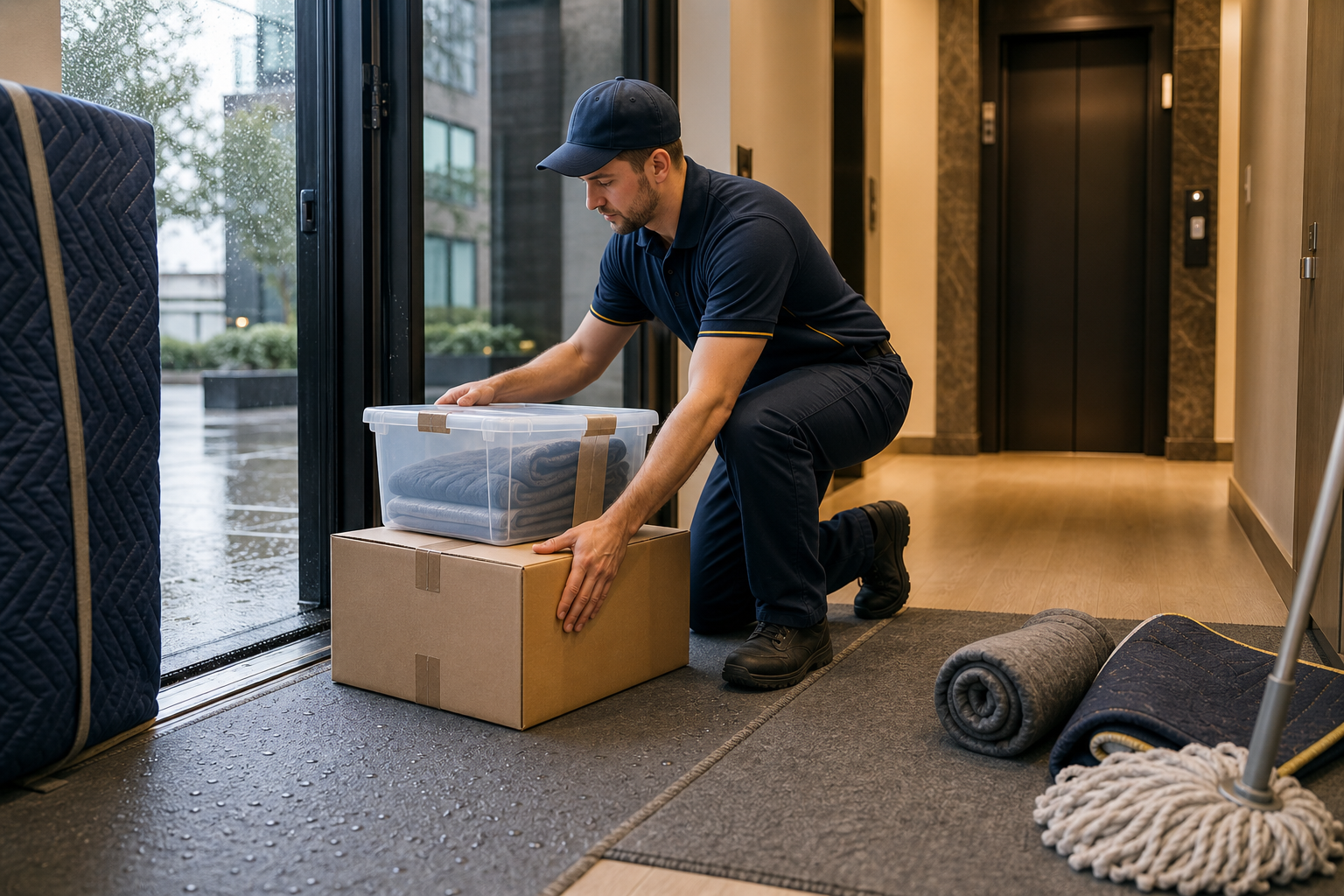
Cardboard needs attention because it can soften on damp pavement or in steady rain. Sealed boxes, lidded bins, and a dry staging area near the entrance reduce the time belongings spend exposed. They do not make every container waterproof, but they keep items moving through a controlled path instead of sitting outside.
Some belongings need separate handling. Electronics, documents, artwork, wood furniture, textiles, and certain metal items can react badly to even limited moisture. The useful distinction is simple: some household goods can tolerate brief damp contact, while others may have problems later.
Parking distance affects the same protection plan. A longer carry means more exposure for boxes and more water entering shared areas. In condo and high-rise settings, the practical question is whether the loading zone, elevator reservation, and building access rules match the rainy-day plan.
Rain preparation has limits. Mover availability, building policies, and move terms and conditions vary. The controllable parts are the route, staging area, floor covering, and the items kept out of the rain.
Rain shifts a move from pure logistics to access and moisture control. The best rainy apartment moves keep the legal parking path short, the interior route protected, and sensitive items away from wet thresholds.
Before move day, it is useful to align building rules, elevator timing, loading access, and any rescheduling terms. That gives the moving team a clearer path and gives shared spaces a better chance of staying clean.
If rain is in the forecast, ask the moving team to review parking distance, building access, and moisture-sensitive items before move day. Smart People Moving provides local moving services and can review access details, building rules, and weather-sensitive items in advance so the plan is clearer before the truck arrives.