

Large furniture can make a straightforward move feel complicated fast. Bed frames, dining tables, desks, and modular pieces may need to come apart, but the answer depends on the item, the building layout, and the service scope.
For local moves, the most useful preparation is simple: identify the pieces that may cause access problems, keep small parts organized, and clarify reassembly expectations before move day.
Which furniture may need disassembly before movers arrive
Furniture usually becomes a disassembly question when its size, weight, shape, or construction conflicts with the access path. A piece may fit in one room but become difficult at a narrow doorway, stair turn, elevator entrance, or hallway corner. That is why the answer to “do movers disassemble furniture” often depends on both the item and the home.

Common candidates include bed frames, headboards, dining tables, large desks, modular sofas, wardrobes, tall shelving units, and some entertainment centers. These pieces may have removable rails, legs, panels, leaves, or add-on parts. For example, a bed frame may move more easily once rails and slats are separated.
Access can matter as much as the furniture itself. A heavy dresser may stay assembled if the route is open and stable. A lighter desk may need partial disassembly because of a tight turn or low ceiling.
Furniture design also sets limits. Simple bolt-together pieces are different from antiques, custom cabinetry, fragile finishes, or complex manufacturer systems. Some items are built to come apart cleanly; others may become harder to rebuild if treated like standard flat-pack furniture.
Before move day, it helps to separate items into three groups: large, awkward, and complex. Large items may only need access planning. Awkward items may need partial separation. Complex pieces usually need closer discussion before anyone assumes full disassembly and reassembly will happen on site. If the furniture is part of a broader apartment timeline, an apartment move checklist can also keep access notes, utility timing, and building details from getting scattered.
What to label, photograph, and confirm for reassembly
Disassembly is not only about taking furniture apart. It also affects how parts are matched, protected, and understood again at the destination. Clear details reduce confusion for the moving team and for anyone handling reassembly later.
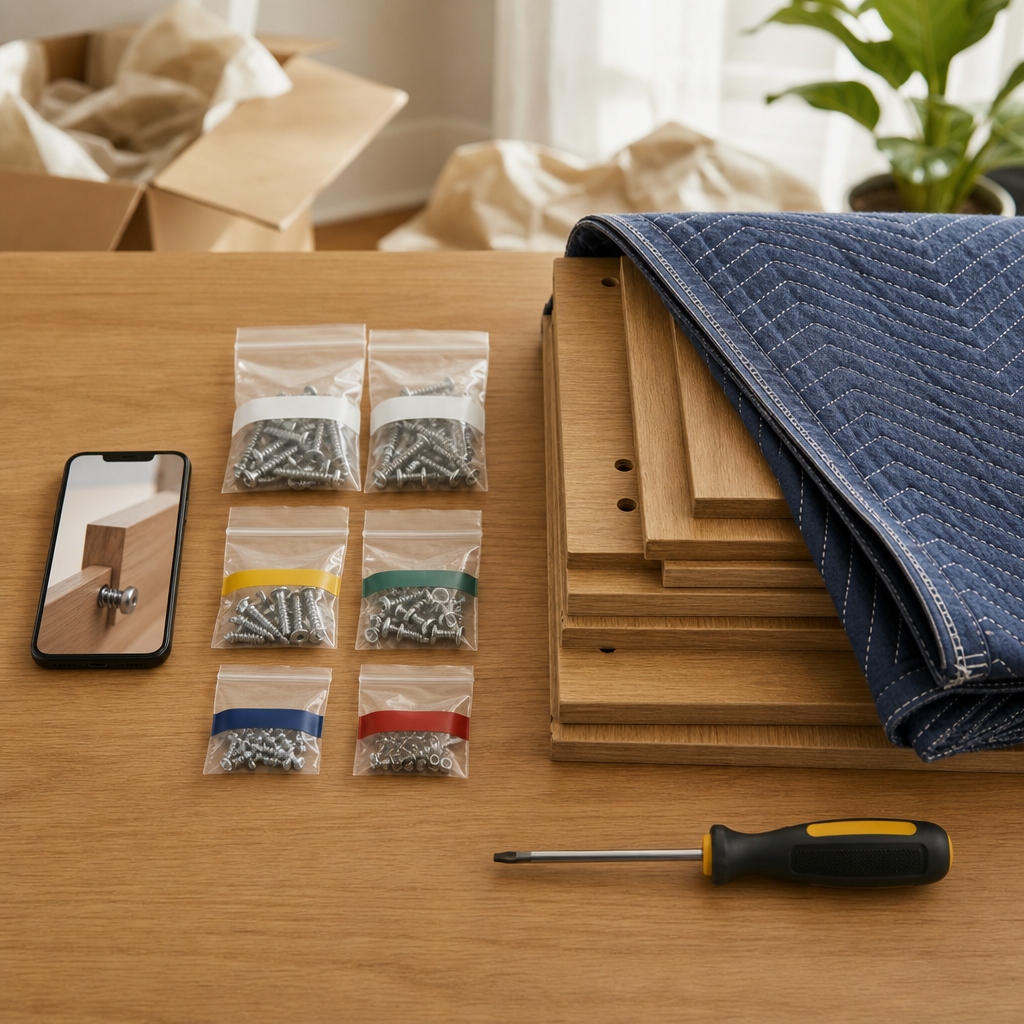
Hardware is the first place small problems appear. Screws, bolts, brackets, washers, shelf pins, and specialty fasteners can look alike once removed. Separate hardware bags keep each group connected to the bed frame, table, desk, or modular unit it came from. Labels can identify the item, room, or section.
Photos add useful context. They do not replace assembly instructions, but they can show how parts were positioned before removal. A close photo of a hinge, bracket, drawer track, table leg, or headboard connection can make later matching easier. Wider photos can also document the item’s condition and layout before handling.
Manufacturer complexity should be discussed early. Some furniture is designed for routine breakdown and reassembly. Other pieces may include fragile finishes, built-in components, or connectors that are not simple to reset. That does not mean the item cannot move, but it changes the scope conversation.
Access details belong in the same note. Tight doorways, stairs, elevators, landings, and narrow hall turns can all affect the plan. Measurements and photos help explain why a large wardrobe, table, shelving unit, or bed frame may need extra review.
Reassembly expectations should stay realistic. Movers may handle common furniture assembly tasks when they fit the agreed scope. Complex, antique, custom, or manufacturer-specific pieces may require a different plan. Good labels, separated hardware, reference photos, and clear access notes make the quote and move-day plan easier to understand.
The useful question is not only whether movers disassemble furniture. It is whether the team has enough detail to plan the right scope.
Large pieces, tight access points, hardware bags, and reference photos all shape that answer. When complex furniture is involved, a clear quote request helps set realistic expectations for transport and possible reassembly.
Smart People Moving provides residential and related moving support that may include furniture disassembly and reassembly when it fits the move scope. Sharing item details and access notes helps the team assess what is practical before move day.
When you request a quote, include a large furniture list and note any tight stairs, elevators, doorways, or hall turns so the moving scope can be reviewed clearly.