
When a move is close, packing can become the part that feels least predictable. The question is not only whether to pack yourself or pay for help. It is which items, rooms, and materials need support, and which can stay in your hands.
A clear choice between self-packing, partial packing, and full packing makes the quote easier to understand and moving day less improvised. For the surrounding logistics, a simple apartment move checklist can help keep address changes, utilities, and building details separate from packing decisions.
Choose by fragile items, room complexity, and time
The choice between self-packing, partial packing, and full packing usually starts with three questions: what is fragile, which rooms are slow, and how much time is left. Self-packing keeps control with the household, but it also leaves organization and material planning on your side. Partial packing targets the highest-friction areas. Full packing shifts most of the workload to the moving team.
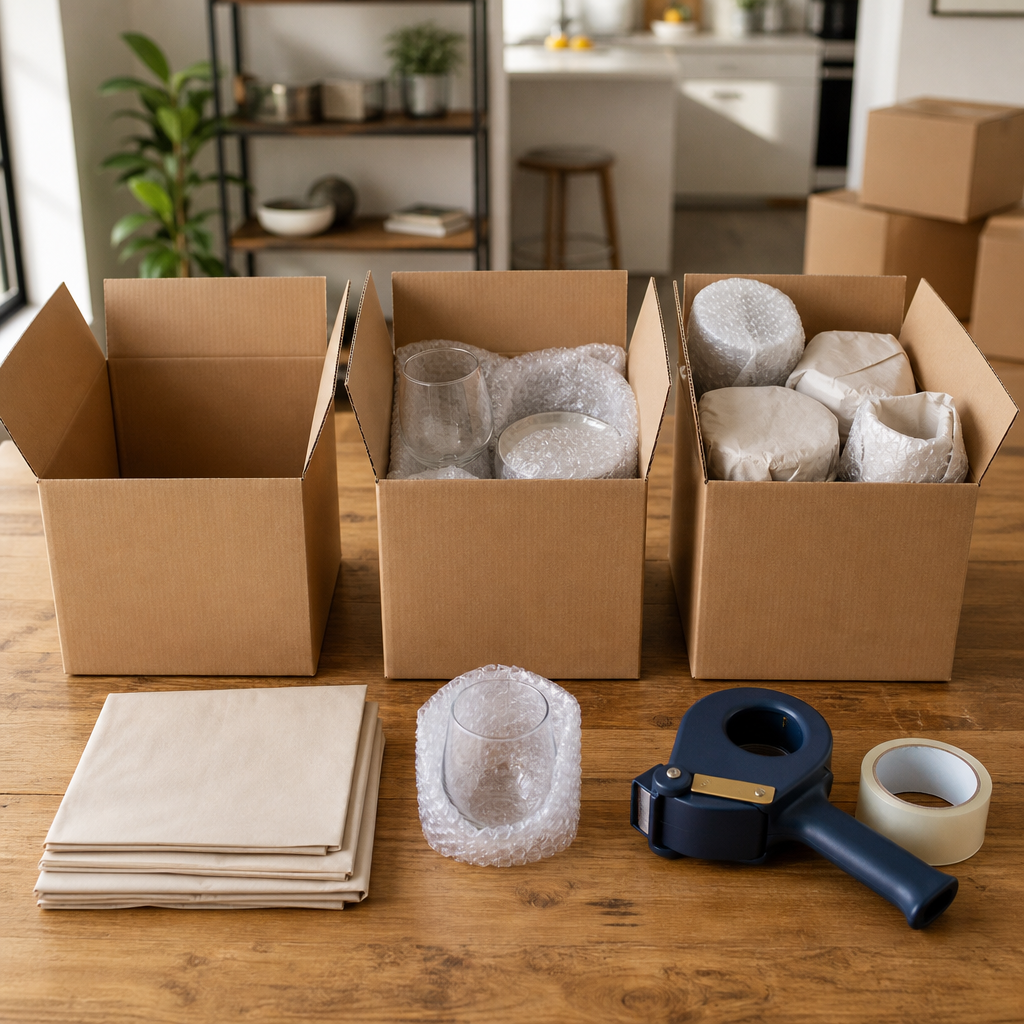
Fragile categories often make partial packing practical. Glassware, framed art, lamps, electronics, and delicate decor may need more care than clothes or books. The point is not the number of boxes. It is where a packing mistake would be hardest to fix.
Room complexity changes the answer. Kitchens hold many small, breakable, or awkward items. Garages, closets, and storage areas often mix categories that take longer to sort. Partial packing can cover those spaces while you handle simpler areas.
Full packing becomes more useful when time is tight. Work schedules, family needs, travel, or a close move date can make a managed process easier to follow. The quote still depends on what is included, which supplies are needed, and how organized the home is before packing begins.
A simple comparison helps:
- Self-packing: time, supplies, and confidence are already in place.
- Partial packing: fragile rooms or difficult categories need help.
- Full packing: most of the home needs structured packing support.
Clarify the quote: scope, supplies, and boundaries
A useful packing quote starts with scope. The mover needs to know whether the request is self-packing with supplies, partial packing, or full packing. That choice affects labor, materials, and fragile-item planning.

With partial packing vs full packing, the boundary matters most. Partial packing usually covers selected rooms, categories, or items. A kitchen, glass cabinet, framed art, electronics, or fragile shelving group may be included while other areas stay outside the service. Full packing asks the mover to handle most household packing, within the company’s service rules and exclusions.
Concrete groups make the estimate clearer than broad phrases. “Kitchen fragile items and two closets” is more useful than “some packing help.” Supplies also need clear wording because boxes, paper, tape, wrap, specialty cartons, and labeling may be handled differently by each provider.
Boundaries reduce confusion on moving day. A clear quote separates what movers pack, what is already packed, and what is not part of the service. That can include personal documents, items traveling separately, restricted items, or belongings that need a decision before boxing.
If you are comparing options for a local move, Smart People Moving offers local moving support with quote options for self-packing, partial packing, full packing, and packing supplies when requested.
A strong request answers three questions: which rooms are included, which item types need extra care, and which supplies are expected from the mover. Clear scope may not guarantee a final price, but it gives both sides a better starting point.
The right packing level balances risk, time, and control. Self-packing can work when items are simple and the schedule is realistic. Partial packing fits fragile rooms or mixed categories, while full packing suits moves that need broader structure.
Before requesting a quote, it can help to note the rooms, fragile items, supply needs, and anything movers should leave out. For a clearer packing quote, share those details when you request moving support from Smart People Moving.