
Local moves in Northern California can stall when building rules and physical access get treated as one issue. A manager may approve the move, yet the truck position, elevator timing, hallway turn, or loading path can still slow the day.
For Bay Area and Sacramento moves, clearer planning starts by separating permission from pathway readiness. That distinction helps homeowners, apartment residents coordinating building logistics, small offices, and local operators compare providers, schedules, and move-day checkpoints with fewer surprises.
Separate the rule from the route before move day
Compliance planning and access planning answer different questions. A building rule says what is allowed: elevator windows, loading-area use, hallway protection, insurance documentation, manager coordination, or noise limits when they apply. The route shows what can physically work: where the truck can stand, how doors open, whether hallway turns are tight, and how items move from room to vehicle.
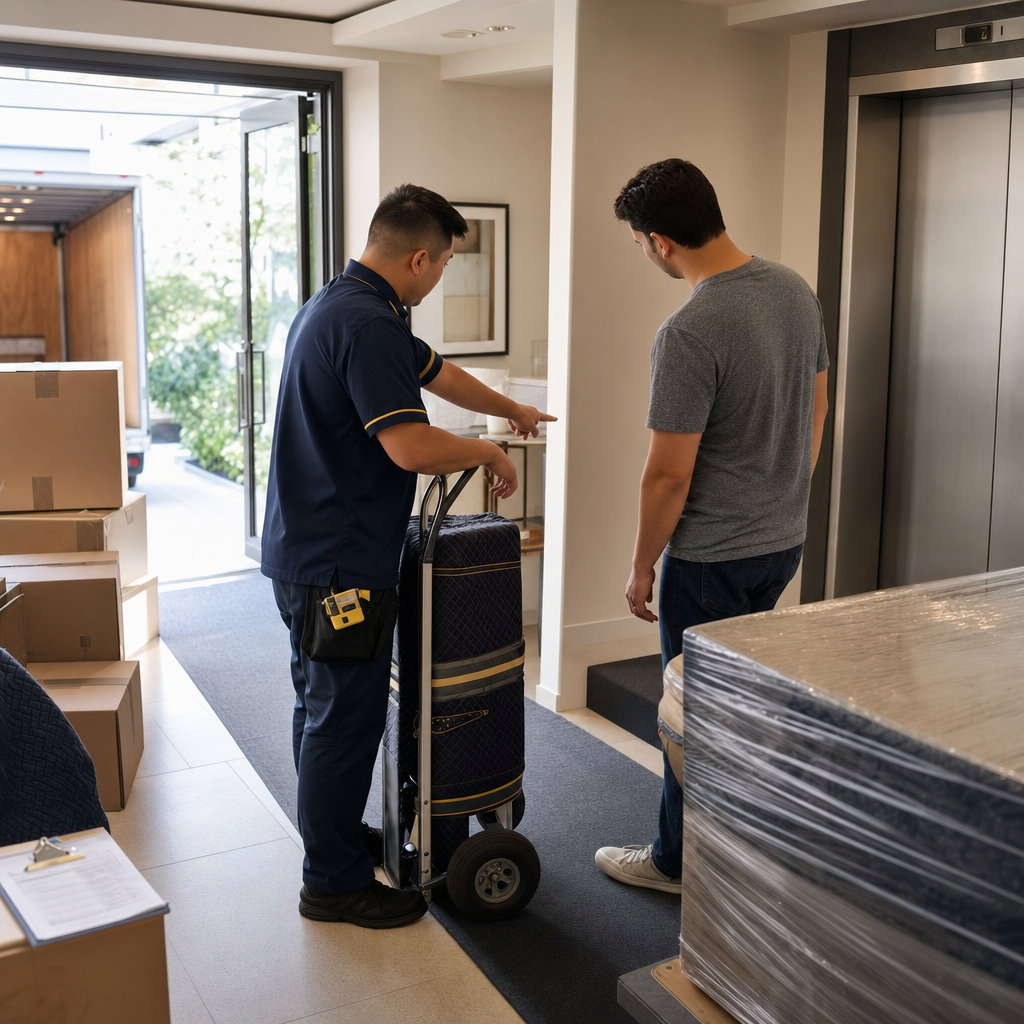
That split matters because permission does not prove feasibility. A certificate of insurance, dock reservation, or manager email may clear the move on paper. It still may not show whether a padded item can turn through a lobby or whether staging will block a shared corridor.
The reverse is also true. A clear path does not replace building coordination. For a Bay Area or Sacramento move, the stronger planning question is two-part: is entry allowed, and can the route support the work without avoidable delay or property risk? Door edges, floor runners, elevator timing, loading distance, and staging space all shape the answer.
When providers separate rules from routes, comparison becomes easier. Compliance shows whether expectations are understood. Access planning shows whether the physical site has been checked.
Compare Bay Area and Sacramento as distinct planning environments
Bay Area and Sacramento logistics share broad categories: compliance, access, routing, facility coordination, and provider readiness. The difference is the planning environment around those categories.

In the Bay Area, dense development, multiple local jurisdictions, port or intermodal exposure in some corridors, and tighter access conditions can affect move-day flow. Timing, staging, truck movement, and building windows may need closer alignment with the actual site. A plan can meet the rules and still run into friction if curb space, loading areas, or neighborhood constraints are not realistic.
Sacramento planning can shift the emphasis. Some moves or facility deliveries may involve wider layouts, different distribution patterns, and less coastal-style congestion. That does not make every job simpler. It changes the questions toward route fit, local permitting expectations, facility access design, and coordination across nearby counties or service areas.
The useful comparison is not which region is harder. It is which assumptions change by region. Bay Area planning often needs tighter attention to constrained access and jurisdictional variation. Sacramento planning often needs clearer review of regional spread, facility layout, and cross-county consistency.
Strong Northern California planning keeps two checklists separate. One covers the rules: building contacts, access windows, insurance needs, and required coordination. The other covers the route: parking, truck approach, elevator timing, hallway protection, and staging space.
Before booking, it can help to ask who verifies each item and what changes if access shifts. That keeps the plan practical, not only compliant on paper.
Smart People Moving supports residential, apartment, and small office moves with practical planning for property protection, access, scheduling, and move-day communication. If you are planning a local move, the team can review access details early so timing, protection, parking, and handoff expectations are clearer before move day.