

A move feels hardest when every task becomes urgent at once. Practical moving guidance works best when it turns the process into a clear timeline, so each choice has a place before moving day arrives.
This approach suits households preparing for a local move or regional move and wanting fewer last-minute decisions. It focuses on what to sort early, what to keep within reach, and how to make arrival feel manageable.
Before packing starts: plan, declutter, and group by priority
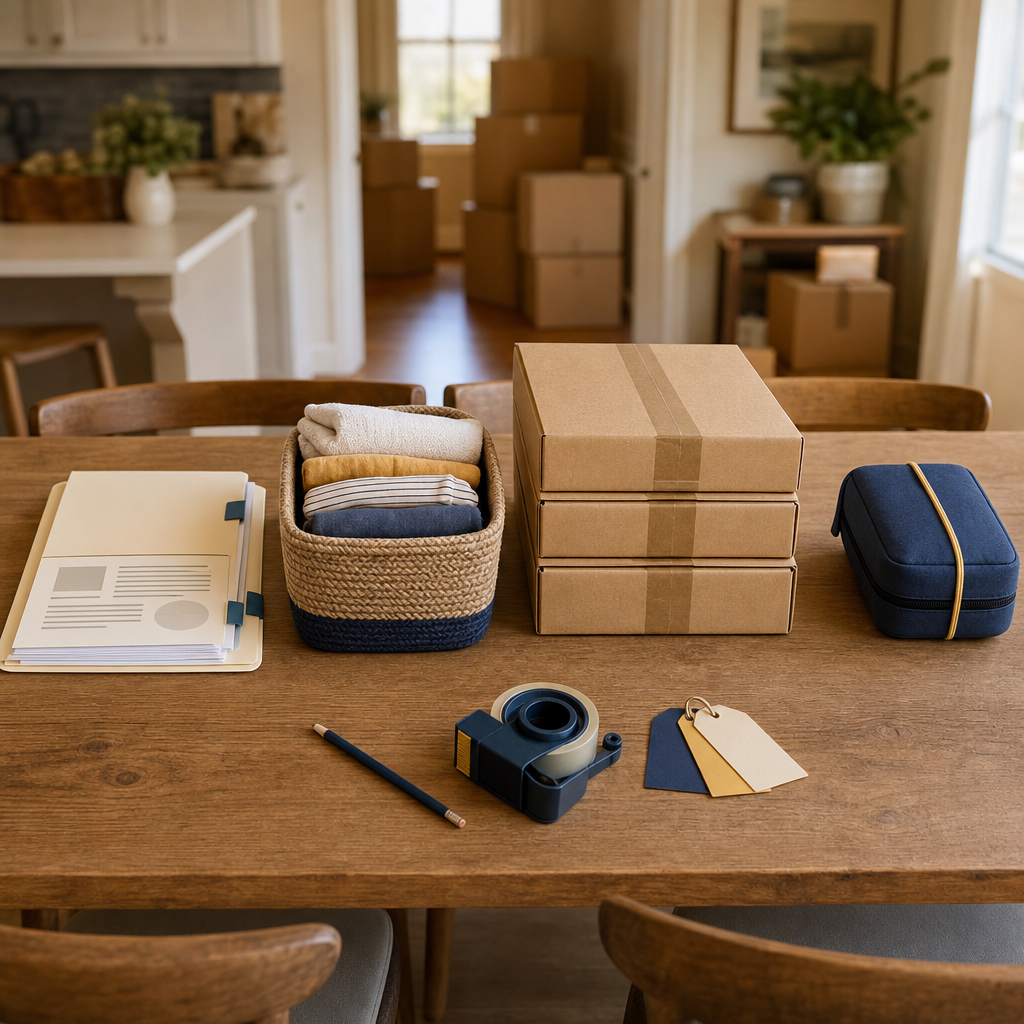
A calmer move often starts before the first box is filled. Early planning is less about speed and more about reducing uncertainty: what is going, what is not, what must stay accessible, and which choices affect the rest of the timeline.
A single paper or digital folder can keep quotes, contracts, inventory notes, address-change reminders, and service details in one place. Its value is practical. When moving information is centralized, fewer tasks depend on someone remembering where a detail was saved.
Decluttering belongs before packing because every kept item creates work later. Items that no longer fit the household still need a box, vehicle space, and attention during unpacking. Separating donation, disposal, sale, and keep piles before boxes take over the rooms makes the move easier to read.
Packing is clearer when belongings are grouped by priority as well as by room:
- daily items needed soon after arrival;
- often-used items that are not urgent;
- seasonal, decorative, or stored items;
- fragile or awkward items needing extra care;
- documents, keys, valuables, and essentials kept apart.
This priority layer gives each box a role. A vague “miscellaneous” box may seem harmless at packing time, but it slows the household down when one specific item is needed quickly.
Moving day and arrival: keep essentials close
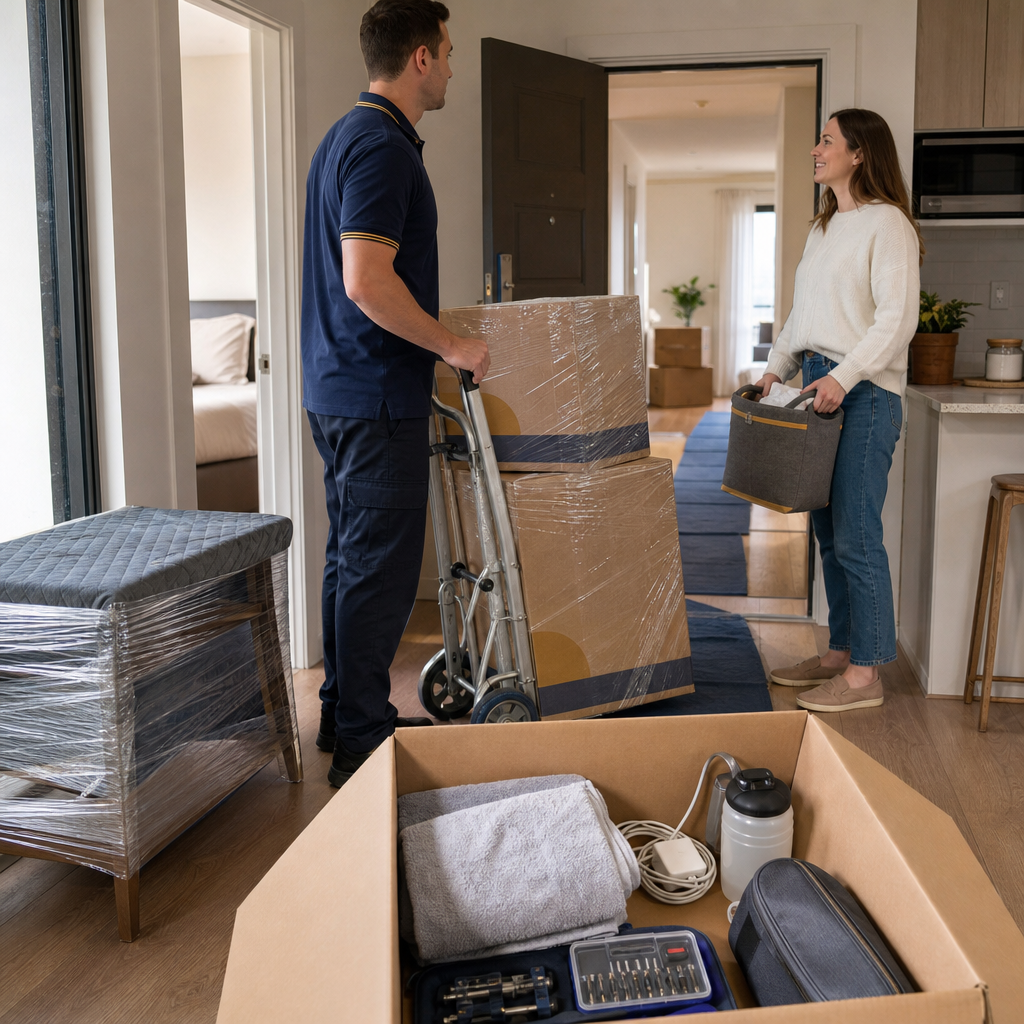
Moving day is easier when arrival is treated as a separate stage, not just the end of transport. The main load may be organized by room, but the first few hours depend on a smaller set of immediate-use items.
An essentials box, tote, or small group of bags should stay physically close to the household. Common contents include chargers, basic toiletries, a towel, a change of clothes, water, simple snacks, keys, important papers, and a few small tools. The aim is not to prepare for everything. It is to cover the first stretch while furniture is still wrapped and decisions are moving quickly.
Labels also matter more after arrival. “Kitchen” is helpful, but a high-priority kitchen box for basic meals has a clearer purpose. The same idea applies to bedding, bathroom items, and work or school supplies.
Unpacking usually works best when it restores usable zones first. Sleeping space, bathroom access, device charging, and a simple food area often support comfort before decorative or low-use boxes matter. For families, shared households, or moves with pets, familiar items and daily supplies reduce confusion because they do not depend on finding one carton in a large stack.
A calmer move usually comes from sequence, not speed. Planning early, reducing what travels, and keeping essentials separate all lower the number of rushed choices.
Before moving day, it can help to review supplies, address changes, and fragile-item protection. At arrival, the most useful first step is a livable setup: sleep, bathing, charging, and simple meals before the full unpacking begins.
For help turning this timeline into a practical plan, Smart People Moving helps households prepare for local or regional relocation and offers moving support with next-step details through its website. When you are ready, you can choose a next step that fits your household.