Oakland and Berkeley apartment moves often hinge on a few practical access details: curb space, building entry and timing. A truck may fit on the street but still be affected by posted rules, elevator reservations or loading-area limits. For renters planning student-season or cross-Bay local apartment moves, checking these points early makes the schedule more realistic before the first box moves.
Can the truck legally reach the curb at both addresses?
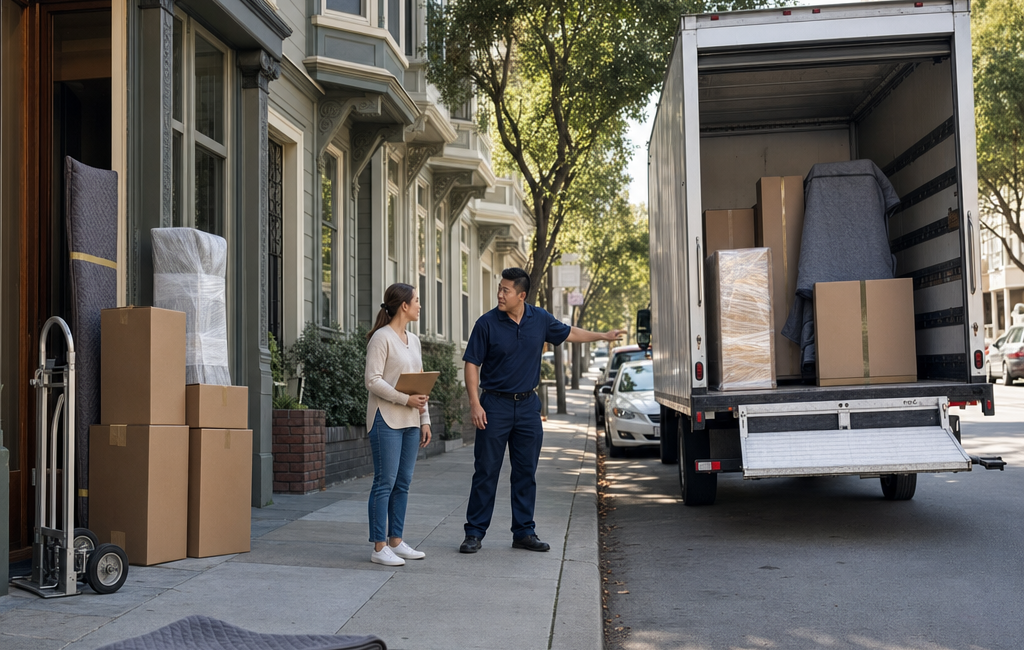
For an East Bay apartment move, legal curb access is not the same as street width. A truck may fit near the building but still face residential truck rules, meters, street sweeping, loading zones or temporary no-parking requirements. That is why an Oakland moving truck parking checklist starts at the curb.

The same question applies at pickup and destination. An Oakland address and a Berkeley address may have different city rules, building rules and curb conditions. If one end is workable, the other still needs its own check. In dense apartment areas, the weak point is often the short path from truck to entrance, not the miles between cities.
Official permit verification helps because rules can vary by block and use case. Oakland materials reference truck parking limits and obstruction-related permits in some curb situations. Berkeley has its own engineering and temporary parking permit processes. These references do not mean every move needs the same permit. They do show why a past move or a neighboring street can be a poor guide, and why a broader apartment move checklist can be useful when small logistics start to stack up.
Building access can also change what “curb access” means. A close parking spot may help less if the entrance, freight elevator, loading area or property manager approval is unavailable. During student move season, several buildings may compete for the same curb space or elevator window.
A realistic plan connects the street, entry point and rules at both addresses. Cross-Bay timing depends on that access chain as much as traffic.
Will the building be ready when movers arrive?
A building can become the quiet bottleneck in an East Bay move. The truck may have a legal curb spot and the crew may arrive on time, but the move can stall if the entry path is not open. For Oakland and Berkeley apartments, readiness means more than an unlocked front door.

The practical access chain includes the street entrance, lobby, elevator or stairs, hallway and unit door. One restricted link changes the work. A passenger elevator may be shared with residents, a freight elevator may require a reservation or a lobby may need protective pads before furniture passes through. These details affect waiting time and carrying distance.
Building rules sit beside city parking rules. Curb space, meters, street sweeping and temporary no-parking signs matter, but they do not confirm that movers can reach the apartment from the curb. The destination needs the same review, especially when a cross-Bay schedule depends on both buildings.
Useful readiness details include:
- confirmed move-in or move-out window;
- elevator or freight elevator availability;
- loading zone or garage access rules;
- entry fobs, gate codes or lockbox instructions;
- certificate of insurance requests from the building;
- contact details for a manager, front desk or onsite staff.
A booked move does not automatically reserve the building. During busy weekends or student move periods, elevators and loading areas may already be assigned. The clearest estimate comes from treating curb access and building access as one system.
A useful moving plan checks more than the driving route. It shows whether the truck can stop legally, the crew can enter smoothly and each building is ready at the right time. Before confirming a move window, it may help to verify city parking requirements and gather building access details for both addresses. Those details give the moving team a clearer view of the real move-day setup.
Smart People Moving supports local apartment, home and cross-Bay moves by reviewing practical details such as inventory, street access, building entry and timing during the quote process. When you request a quote, sharing parking notes, street details and building rules helps the team understand the actual access setup before move day.