
Peninsula apartment, condo, house, and office moves often run on tight calendars. Packing matters, but access can create the bigger day-of delay: truck parking, elevator use, building entry, or a move window that is narrower than expected.
For busy professionals, address changes, utility transfers, and building logistics can sit alongside a short access check. It helps turn a planned move into a workable move. It keeps the focus on practical details that affect timing, crew flow, and follow-up with building contacts.
Confirm the move window, contact, and elevator access
For Peninsula movers, parking and elevator access usually work as one access package. The move window, building contact, entry permission, elevator use, and curb access all shape whether the crew can reach the unit without waiting at the lobby, loading zone, or service elevator.

A confirmed date is not always a usable move window. Apartment, condo, and office buildings may treat elevator use as a separate building process. Some properties use service hours, loading-area rules, access cards, key fobs, or a specific contact who releases an elevator or service entrance.
That contact is worth clarifying early. A leasing office, property manager, HOA representative, front desk, or facilities team may each control a different part of access. One person may confirm the time, while another handles elevator pads, dock access, or temporary parking permission.
Group the essentials before move day:
- approved move window;
- contact for that window;
- elevator or service-entry access;
- curb, driveway, dock, or parking conditions.
Peninsula buildings do not follow one process. Rules vary by property, street, and building type. Treating timing, contact, elevator, and parking as one package reduces gaps and gives the moving plan a clearer path.
Map the curb, loading path, stairs, and carry distance
The curb-to-door route is where access planning becomes practical. A truck may look close on a map, but the real question is where it can stop and how items move from the vehicle to the unit or office.
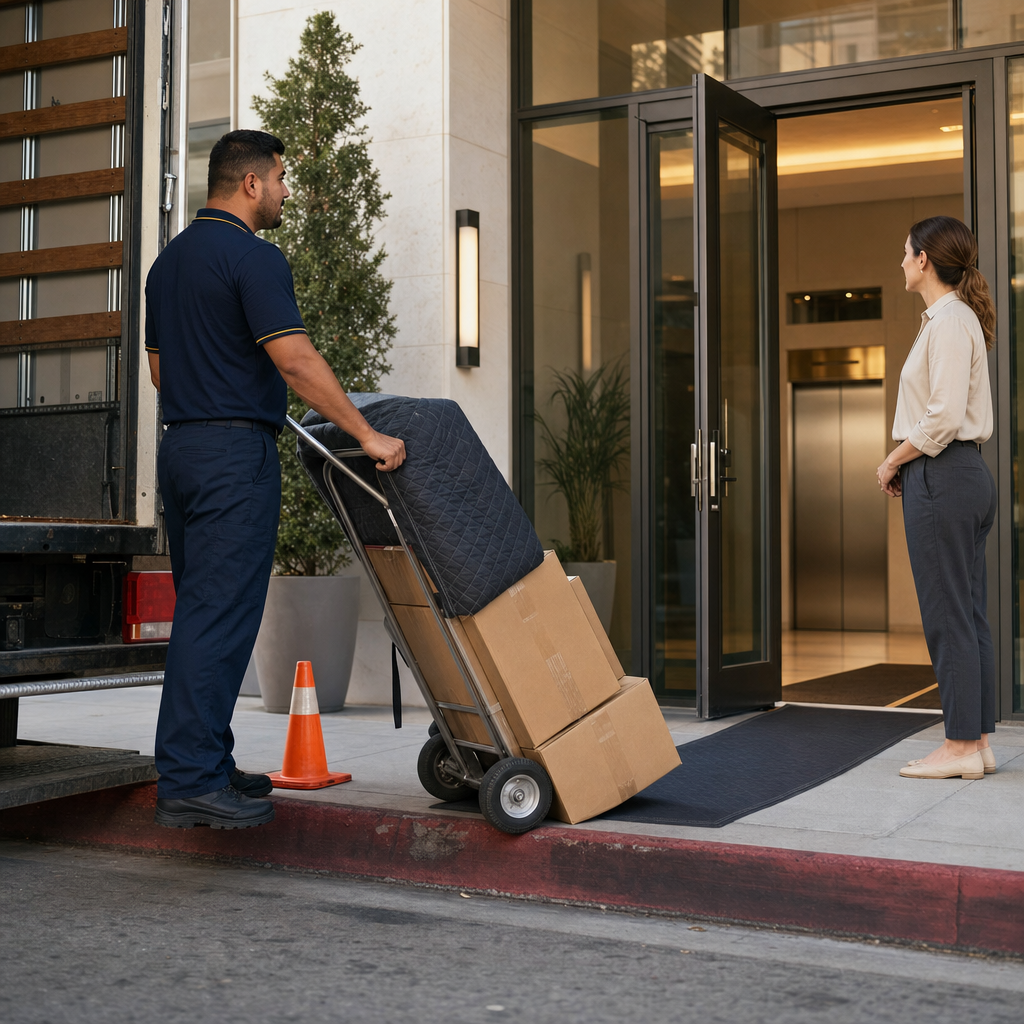
Curb access creates the first bottleneck for local movers. A usable loading position can reduce back-and-forth movement. A blocked curb, tight driveway, or shared loading zone can slow the schedule, especially around apartments, condos, and offices in San Mateo, Palo Alto, and Menlo Park.
The loading path deserves the same attention. Simple details often matter: lobby doors, gates, floor surfaces, hallway turns, ramps, and the distance to the elevator or stairs. A smooth route helps the crew keep a steady flow. Several doors or a long walk can change the pace even when parking seems convenient.
Stairs and carry distance add another constraint. They affect furniture, boxes, equipment, and padded items. A short stair section near an entrance can matter because it changes staging and surface protection.
A concise access note can capture the closest legal loading area, curb-to-lobby route, elevator or stair locations, and any long carry. The point is not just to hold a reservation. It is to understand the path the move will actually follow.
Small access details become important when they stop the crew from starting smoothly. A confirmed window, clear parking plan, elevator access, entry method, and named contact give the move a cleaner starting point.
For tighter work schedules, it is useful to allow for arrivals, lobby access, and longer carries. When property rules are involved, written confirmation can also make the quote and crew plan easier to align.
If you are preparing for a Peninsula or Silicon Valley move, gather your inventory, access notes, parking details, and timing limits before requesting the next step. Smart People Moving supports local residential, apartment, and office moves across the Peninsula and Silicon Valley, including planning around inventory, building access, parking, and timing constraints; you can get a quote when those basics are ready for discussion.