
Moving quotes often assume easy access: nearby parking, short walks, usable elevators, and clear hallways. Many apartment and office buildings work differently.
This how-to guide helps first-time movers spot the access details that can shift a quote before booking. For apartment moves, a broader checklist can also keep address changes, utility timing, and building logistics in one place. The goal is a clearer scope, so the estimate reflects the actual route from door to truck, not just a best-case move.
Which building details can change the quote?
Building access is one of the easiest places for a moving quote to change. Many estimates picture a simple route: the truck parks close, movers use a clear doorway, and items move directly between the unit and the vehicle. When the route is slower or restricted, labor time and planning needs can change.
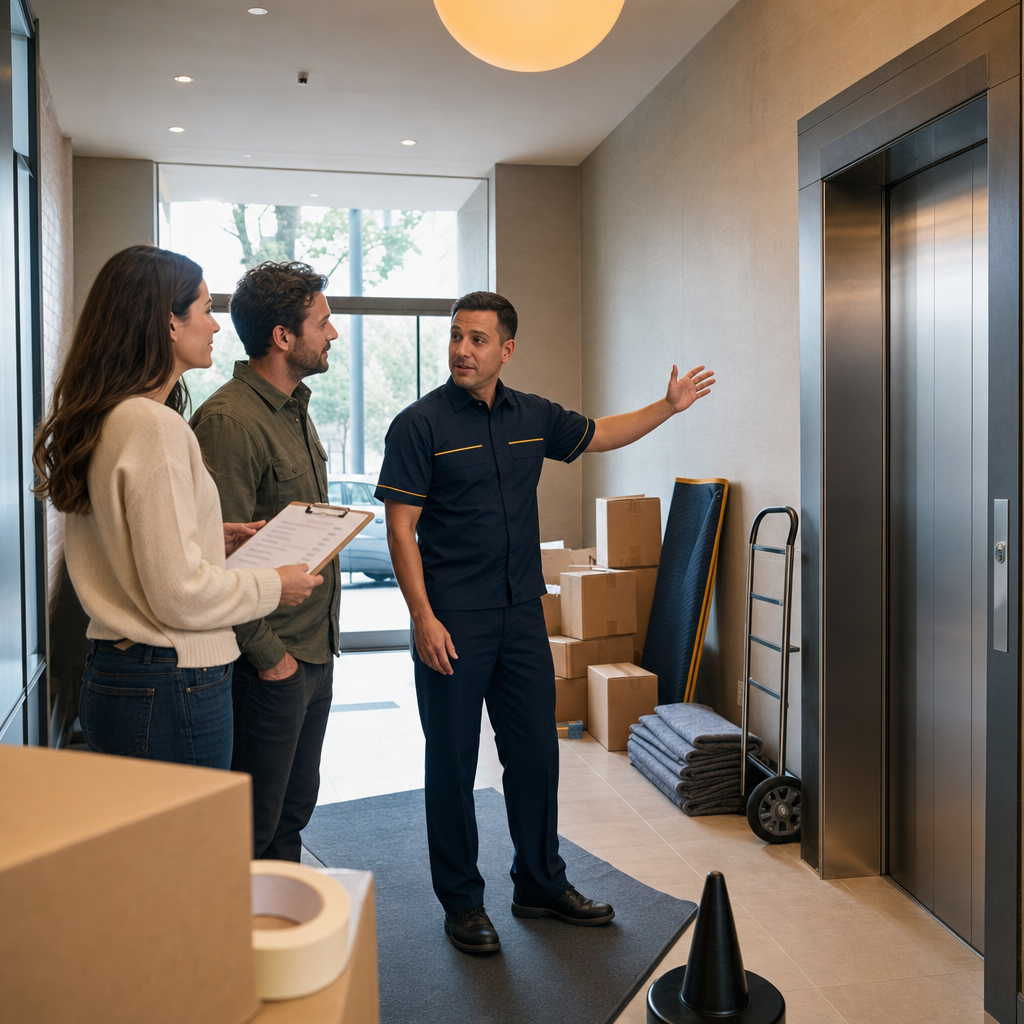
Elevators are a common example. They can make a move easier than stairs, but only when they are available, large enough, and allowed for moving use. Some buildings require reservations or limit move times. If that detail is missing, the quote may not match move-day conditions.
Parking affects the same calculation. A truck near the entrance creates a different move than one parked farther away or outside a loading area. When local movers have a longer carry distance, each load takes more time. In some buildings or streets, permits or loading-zone rules also shape the estimate.
Stairs, narrow hallways, tight entrances, and service-door rules add similar friction. They do not automatically create a problem, but they change the price assumptions. A large sofa, long corridor, or restricted lobby route can make a room-count quote too simple.
How to turn access risks into clear booking questions
Access costs usually appear when the quote assumes an easy loading path and the building tells another story. The issue is not only the obstacle. It is the gap between what the estimate includes and what the move actually requires.

Good booking questions name the condition that may affect labor, timing, or equipment. Instead of asking only, “Are there extra fees?”, ask what the quote assumes.
Useful questions include:
- “Does the quote assume stairs, elevator access, or ground-floor loading?”
- “How do you define a long carry, and does my doorway-to-truck distance count?”
- “Who handles parking permits, loading zones, or building approvals?”
- “Do you need elevator reservations, certificates, or move-in paperwork before the date?”
- “What happens to the estimate if the truck cannot park near the entrance?”
A clear answer should say what is included, what is not, and which condition would change the price. “It should be fine” leaves too much room for different interpretations. More useful wording confirms the assumptions: elevator available, truck nearby, no unusually long carry, and building rules checked.
This is where moving cost planning without hidden surprises becomes practical. Access questions make the building part of the estimate instead of a move-day discovery. They also make it easier to compare movers, because each quote is measured against the same real conditions.
Most surprise access charges begin as missing assumptions. Parking, elevators, stairs, walking distance, and building rules all shape the real scope of a move.
Before booking, it can help to describe the full path from door to truck and ask which details belong in writing. If you are planning a move soon, share access details, building rules, and parking notes while requesting a quote, so the scope can be discussed clearly. A clearer scope makes the final bill easier to understand.
Smart People Moving helps clients plan residential, apartment, and office moves through practical scope conversations before move day, including access, timing, packing status, and building logistics.